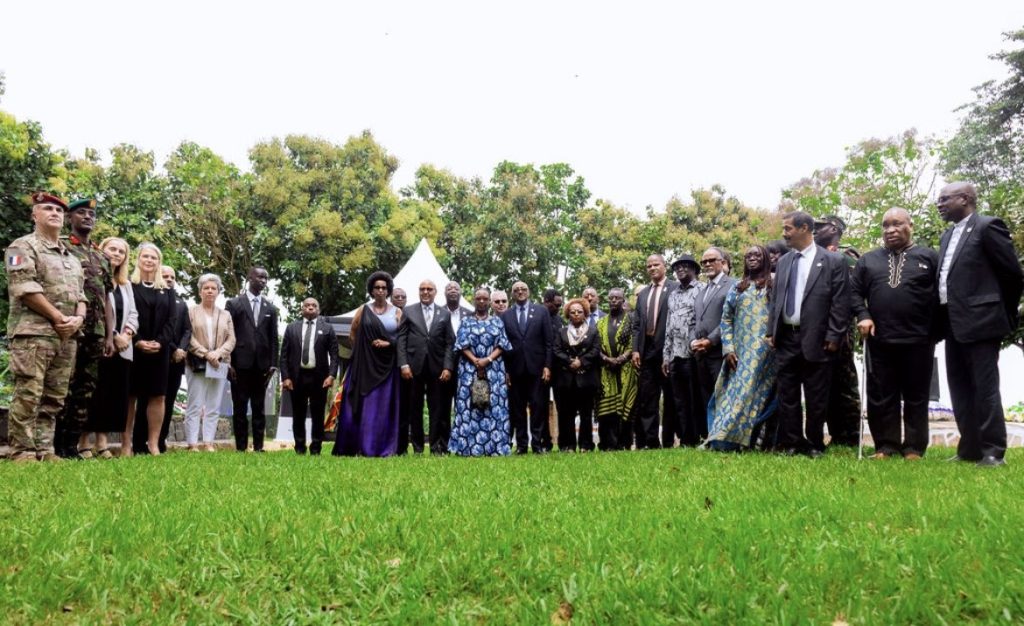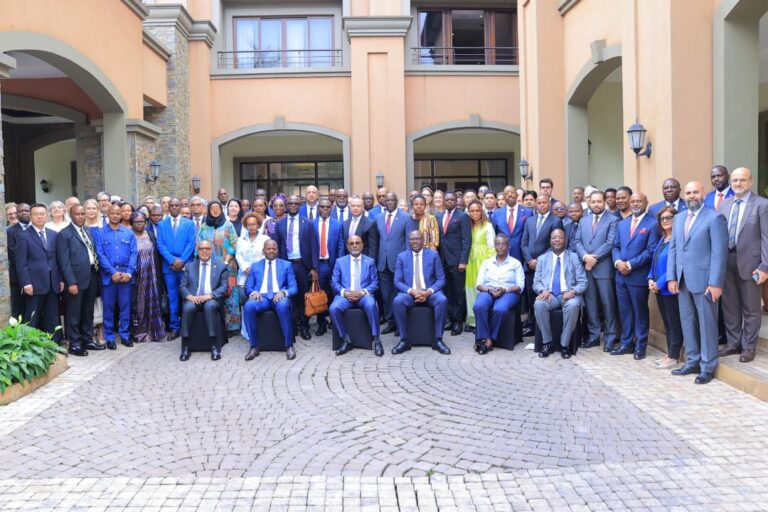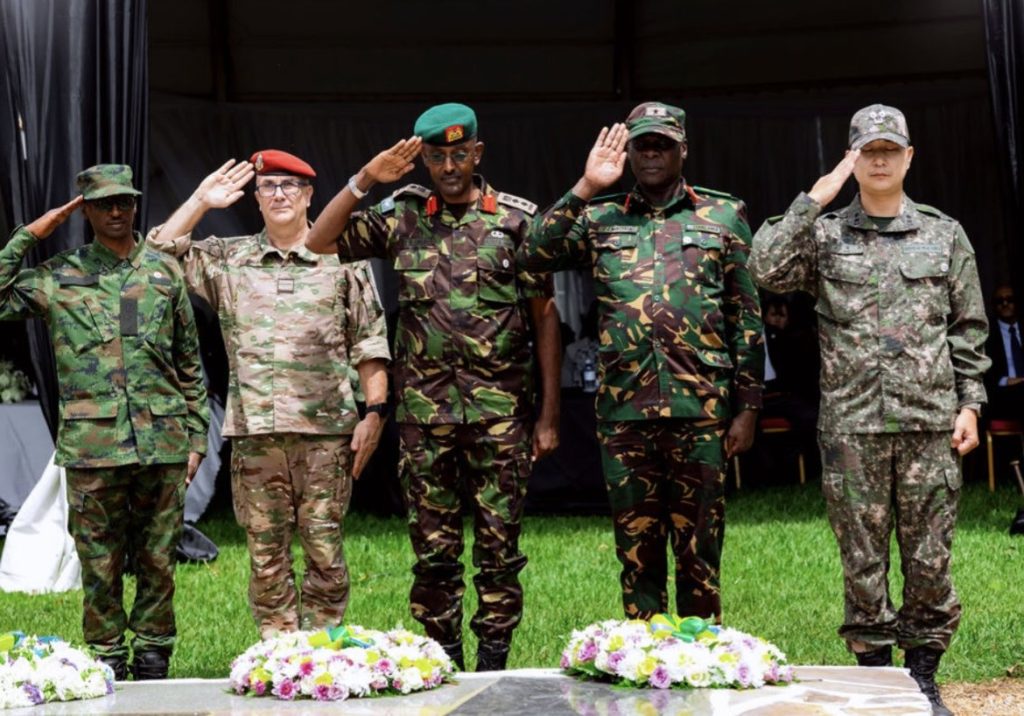
Mpigi, Uganda – The Rwanda High Commission in Uganda marked the 32nd commemoration of the 1994 Genocide, Kwibuka32, on 10 April 2026 at the Ggolo Memorial Site in Mpigi District. The ceremony, led by Ambassador Col. Joseph Rutabana, brought together government officials, survivors, members of the diplomatic corps, and community representatives to honour the memory of more than 4,771 victims laid to rest at the site.
The event was held under the theme “Remember – Unite – Renew,” reaffirming the commitment to “Never Again” and strengthening cooperation between Rwanda and Uganda in preserving peace, historical truth, and shared remembrance. The Chief Guest, Hon. Alice Kaboyo, Minister of State in the Office of the Prime Minister responsible for the Luweero Triangle and Rwenzori Region, joined mourners in paying tribute to the estimated over 800,000 men, women, and children who lost their lives during the 1994 genocide against the Tutsi. She emphasised that Kwibuka is not only an annual memorial event but also a call to conscience, noting that genocide begins long before violence occurs, often taking root through division, exclusion, and dehumanization.
Hon. Kaboyo underscored the importance of vigilance against hate speech, genocide denial, historical revisionism, misinformation, and all forms of intolerance that threaten peace and stability. She stressed that remembrance must be accompanied by action, including education, responsible leadership, and sustained efforts to address root causes of conflict such as inequality, marginalisation, and political exclusion. She further highlighted Rwanda’s recovery journey as an example of how truth, justice, forgiveness, and national unity can enable a society to rebuild with dignity and resilience, offering lessons for the region and beyond.
Ggolo Memorial Site remains one of the most significant genocide memorial sites outside Rwanda, serving as the final resting place of 4,771 victims whose remains were recovered from the Nyabarongo and Akagera river systems into Lake Victoria before being laid to rest in Uganda. It is one of the three genocide memorial sites in Uganda, alongside Lambu in Masaka District and Kasensero in Rakai District, collectively holding 10,983 victims. Hon. Kaboyo stressed the importance of preserving these sites as spaces for remembrance, reflection, and education for future generations.
She also reaffirmed the strong historical, cultural, and geographical ties between Uganda and Rwanda, emphasising continued friendship, cooperation, and a shared vision for peace, stability, and prosperity. Uganda, she noted, remains committed to strengthening bilateral relations through dialogue, mutual trust, and regional cooperation. The commemoration concluded with moments of silence and renewed calls for unity, dialogue, respect for diversity, and protection of human dignity, with Uganda reaffirming its solidarity with Rwanda and commitment to regional peace and reconciliation.
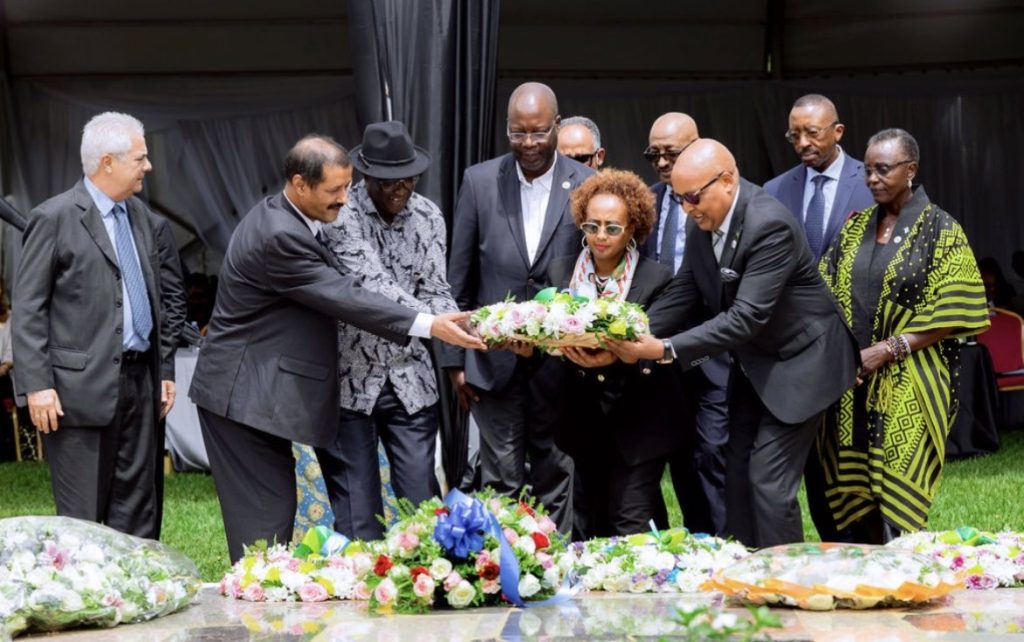
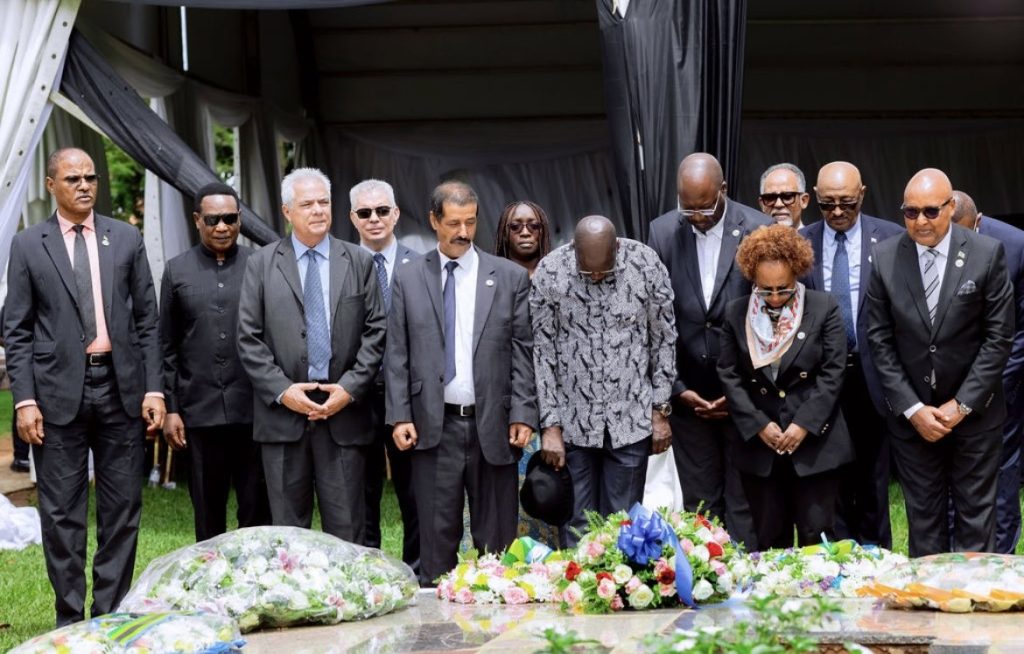
Members of the Diplomatic Corps lay a wreath on the Memorial site