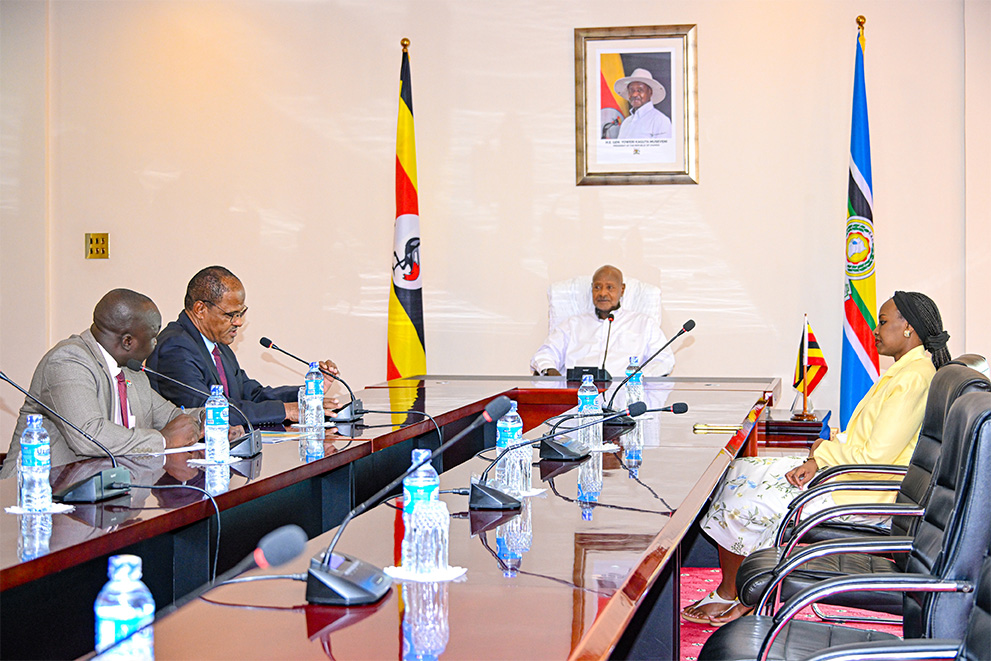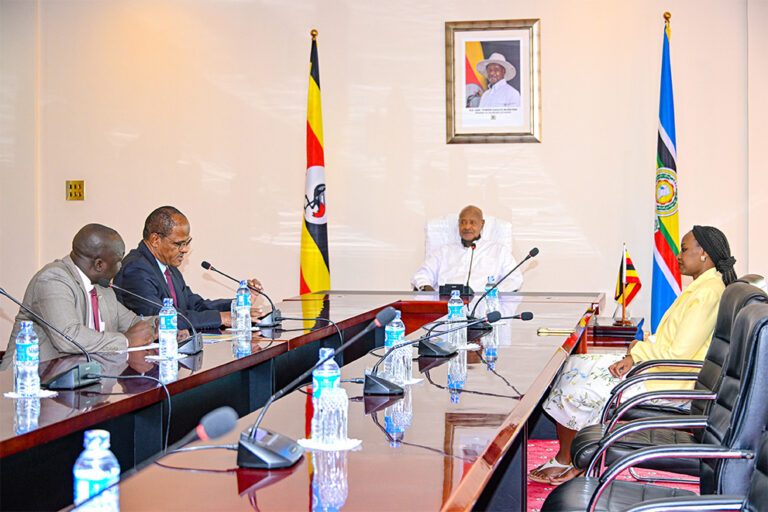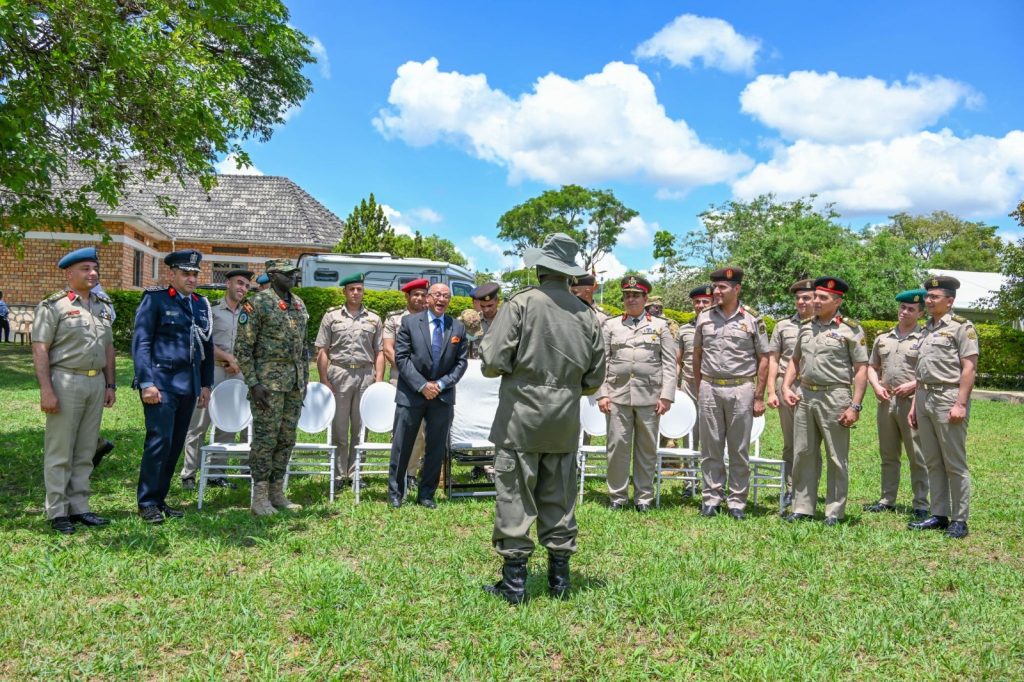
Kyankwanzi, Uganda – President Yoweri Kaguta Museveni underscored the central role of socio-economic development in addressing challenges within the Nile Basin, during a high-level engagement with a delegation from Egypt’s High Military Academy for Strategic Studies. The meeting took place at the National Leadership Institute, where the President delivered a lecture on regional development and shared water resources.
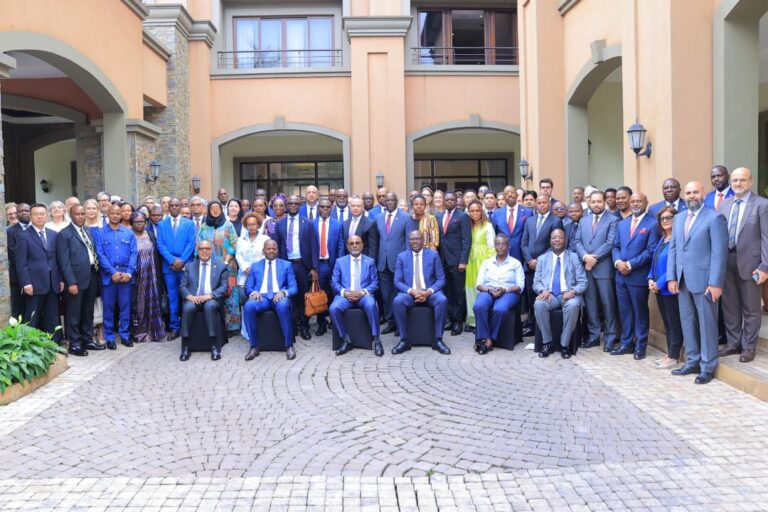
The Egyptian delegation, comprising senior officials from the Ministry of Defence, is undertaking a strategic study visit focused on environmental and geopolitical dynamics affecting the Nile Basin. Their visit reflects growing interest in collaborative approaches to managing shared natural resources across the region.
In his address, President Museveni challenged conventional narratives surrounding Nile Basin tensions, noting that the core issue lies not in historical colonial-era agreements, but in persistent underdevelopment across tropical economies. He identified limited electricity access, low levels of industrialisation, and the increasing impact of climate change as key barriers to the effective and sustainable utilisation of Nile resources. “The fundamental challenge is development,” President Museveni observed, emphasizing that expanding electricity generation and accelerating industrial growth are essential not only for economic transformation but also for environmental sustainability. He noted that improved infrastructure and energy access would enable countries along the Nile to maximise the river’s potential in a manner that benefits all.
The President further highlighted Uganda’s guiding principles of nationalism and Pan-Africanism, describing them as central to fostering unity, cooperation, and shared prosperity across the continent. He reiterated Uganda’s commitment to constructive dialogue and regional partnerships in addressing transboundary resource management.
As part of their visit, the Egyptian delegation toured the Source of the Nile, one of Uganda’s most iconic natural landmarks, gaining firsthand insight into the geographical and ecological significance of the river. The engagement reflects ongoing efforts by African nations to strengthen cooperation on shared environmental resources while aligning development priorities. It also highlights the importance of sustained dialogue in shaping a collective vision for the future of the Nile Basin and the broader African continent.