HARARE, ZIMBABWE
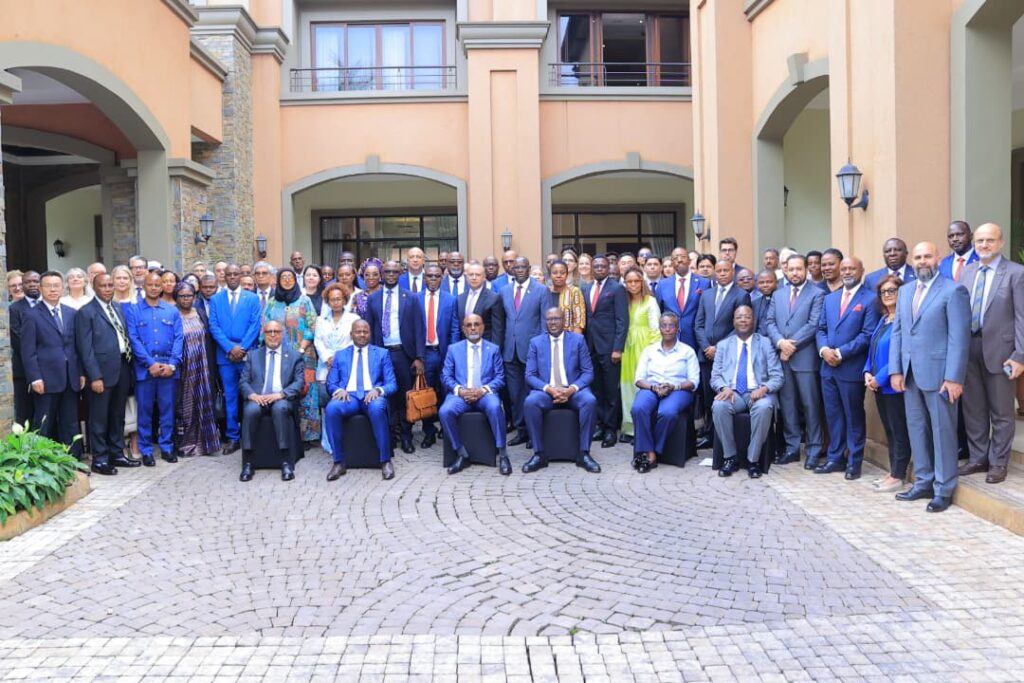
The Zimbabwe–Uganda Business Forum was officially concluded with a strong call for action, marking a significant step towards strengthening bilateral relations and advancing intra-African trade and investment. The high-level engagement brought together government officials, diplomats, investment agencies, and private sector players from both nations, united by a shared goal of translating long-standing political ties into tangible economic outcomes.
Uganda’s Resident Ambassador to Zimbabwe, H.E. Paul Amoru, set the tone by emphasising the importance of results-driven engagement. He noted that while relations between the two countries remain strong, the focus must now shift to ensuring that such platforms deliver real trade and investment outcomes. This message was reinforced by Uganda’s Minister of State for Foreign Affairs (Regional Affairs), Hon. John Mulimba, who stressed that frameworks like the African Continental Free Trade Area (AfCFTA) are already in place and what is needed is practical implementation.
Zimbabwe’s Ag. Minister of Foreign Affairs and International Trade echoed similar sentiments, highlighting that trade between the two nations remains below its full potential. He called for deliberate efforts to unlock opportunities that will drive increased trade and shared prosperity. Technical sessions led by the Zimbabwe Investment and Development Agency (ZIDA) and ZimTrade provided deeper insights into investment opportunities. ZIDA outlined reforms aimed at improving the ease of doing business, including digitalising investment processes to enhance efficiency. Meanwhile, ZimTrade emphasised a focused, sector-driven approach, prioritising industries where Zimbabwe holds a competitive advantage. Across the forum, a clear message emerged: Africa must invest in itself. Delegates underscored the need to leverage African capital, build regional value chains, and foster collaboration rather than competition. Key sectors identified for partnership included agriculture, mining, tourism, energy, manufacturing, and financial services, with a strong emphasis on value addition and industrialization.
A major highlight of the forum was the business-to-business (B2B) engagements, where companies from both countries explored joint ventures, market entry strategies, and supply agreements. These sessions signaled a shift from dialogue to deal-making, positioning the private sector at the center of economic transformation. The forum also highlighted challenges such as limited intra-African connectivity, with leaders calling for improved transport links to facilitate trade. Beyond economics, cultural diplomacy was reinforced through engagements promoting heritage tourism and shared history. As discussions progress, the Zimbabwe–Uganda Business Forum sets a clear path forward deeper cooperation, practical implementation, and a united commitment to driving sustainable growth across Africa.