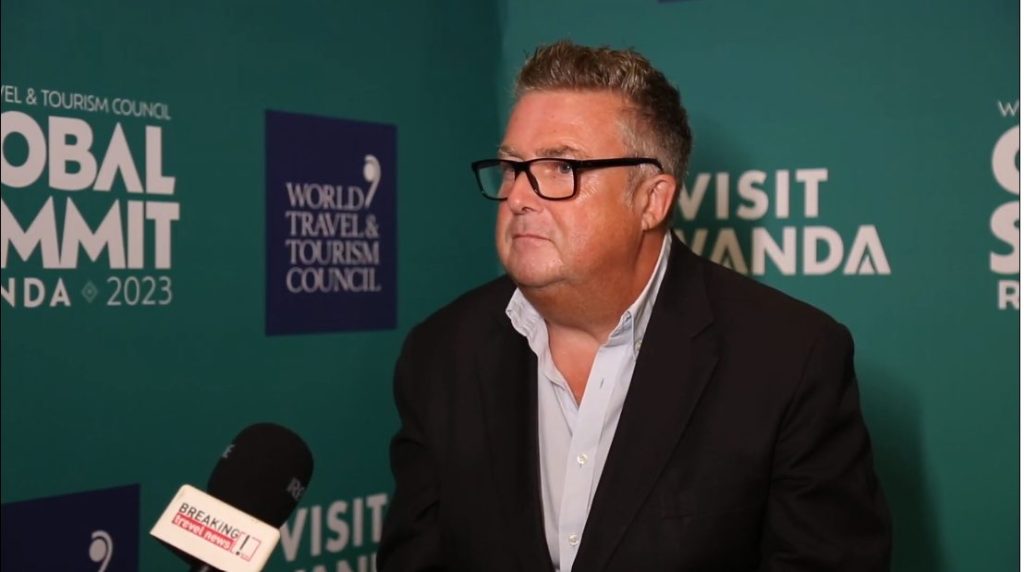
Following the revision of international travel guidance that affected Queen Elizabeth National Park, our writer engaged Mr. Jon Danks, the CEO of African Travel and Tourism Association, in a structured policy dialogue that explored the implications of the revised guidance for destination confidence, international market perceptions, and the strategic role of diplomacy in ensuring that security contexts are communicated accurately, proportionately, and responsibly to global audiences.
Following the 2023 UK advisory that limited travel to Queen Elizabeth National Park to essential journeys only, the FCDO has now revised its guidance. For international travellers assessing risk and reliability, what does this change practically mean when deciding whether to book travel to the park today?
Jon Danks: The revision marks more than a technical adjustment; it represents an opportunity to restore international confidence in Uganda’s tourism ecosystem. Practically, it allows itineraries to regain coherence, re-establishing Queen Elizabeth National Park as the central link between Kibale, Bwindi, and Lake Mburo. This directly improves itinerary efficiency, reopens contracting discussions for lodges into 2026–2027, and enables operators to design complete, experience-rich journeys once again. More broadly, the change begins to reverse suppressed booking trends and signals to global markets that Uganda’s destination governance is responsive, resilient, and credible.
Travel advisories often influence perceptions long after they are lifted. How can Ugandan authorities and tourism operators rebuild traveler confidence and communicate the updated security context to the UK source market?
Jon Danks: Restoring confidence is incremental and must be anchored in transparency and authenticity. From my experience leading communications during global aviation crises, trust is rebuilt through honest engagement combined with compelling storytelling. Uganda now has an opportunity to align diplomatic outreach with industry partnerships, creative campaigns, and skills development for local operators. Capacity-building initiatives such as targeted audits, training, and UK representation can help Ugandan operators navigate UK market segmentation, from luxury travel to MICE.
When aligned with improved air access and coordinated messaging, confidence rebuilding becomes structural rather than symbolic.
Looking ahead, how can Uganda’s tourism authorities and the FCDO sustain constructive dialogue to ensure that future security assessments are fair, proportionate, and clearly communicated, so that UK travelers are informed without inadvertently undermining destinations that are demonstrably safe and well-managed?
Jon Danks: Sustained dialogue requires mutual respect for mandates and an appreciation of the wider diplomatic context. The FCDO’s responsibility to British nationals must coexist with fair, proportionate assessments informed by local realities. Constructive engagement through regular diplomatic exchanges, academic expertise, and industry evidence can help contextualize security considerations without undermining demonstrably well-managed destinations. Aligning tourism, development, and peace-building narratives supports both Uganda’s socio-economic resilience and the UK’s evolving Africa engagement framework.