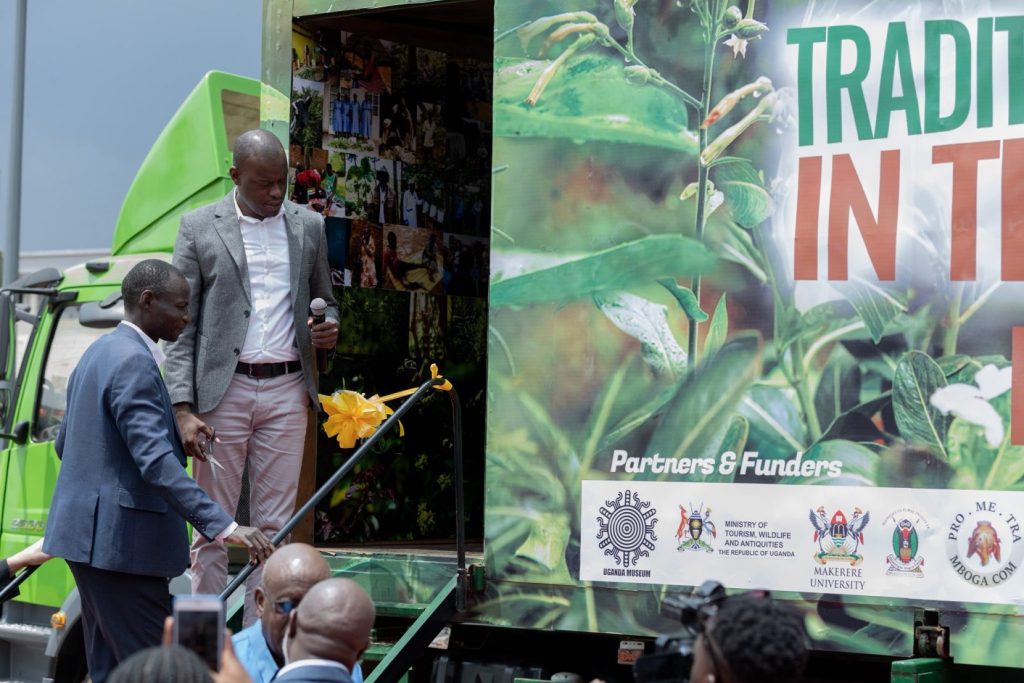
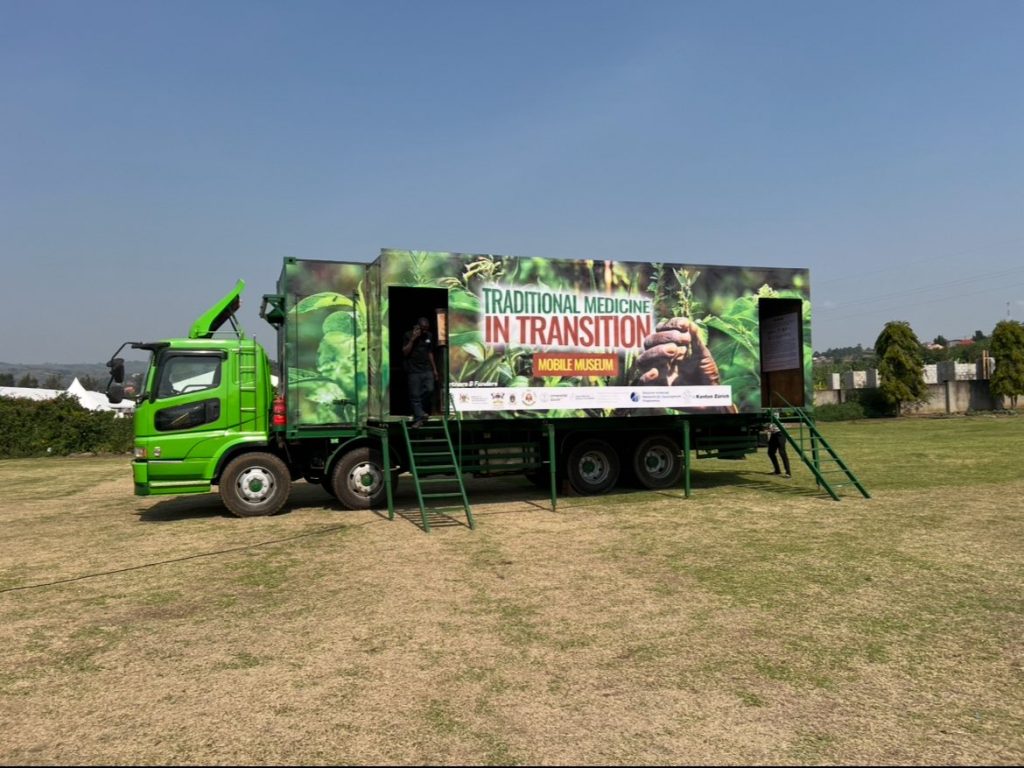
Kampala, Uganda – Uganda’s long-standing tradition of healing with plants and natural remedies is receiving renewed attention through the Traditional Medicine in Transition Mobile Exhibition, a travelling museum initiative designed to bring indigenous knowledge closer to communities across the country. The exhibition was launched at the Uganda Museum by Hon. Martin Mugarra Bahinduka, Minister of state for Tourism, Wildlife and Antiques. Following the Earlier launch at Igongo Cultural Centre. Speaking at the launch, Hon. Mugarra emphasised the importance of safeguarding indigenous knowledge systems. “Traditional medicine is a vital part of our cultural heritage and healthcare history. Initiatives like this exhibition help ensure that this knowledge is preserved, respected, and shared with future generations,” he said.
The mobile exhibition forms part of the Traditional Medicine in Transition research project, an international collaboration examining how knowledge of medicinal plants is preserved, transmitted, and practiced in contemporary societies. According to Dr. Weckerle, the project seeks not only to document traditional knowledge but also to make it accessible to the communities that sustain it. “Our goal is to bring research results back to the people whose knowledge made the research possible. The mobile exhibition allows communities, schools, and young people to engage with their own heritage in a meaningful way,” she explained. The initiative brings together researchers and cultural institutions from Uganda and Switzerland, including Makerere University, the Igongo Cultural Centre, the Uganda National Museum, PROMETRA Uganda in Mpigi, the University of Zurich, and Mamita Herbal Foundation in Mbarara.
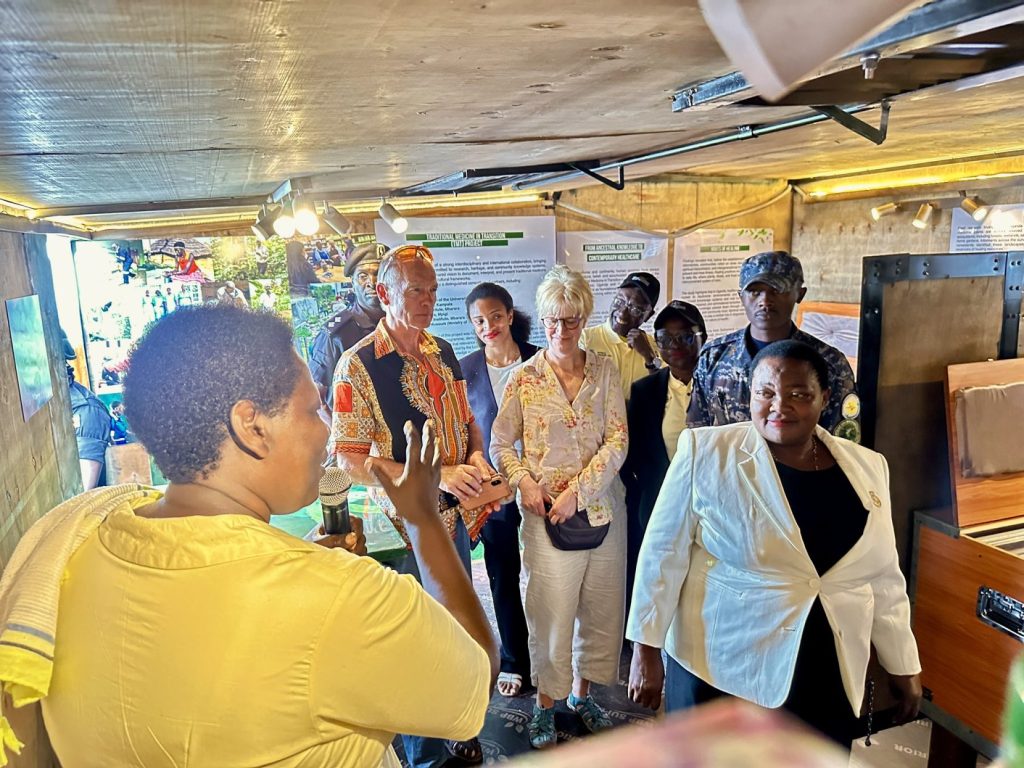
Unlike conventional exhibitions that remain in a single location, the mobile museum is designed to travel to communities where research has been conducted, as well as to schools and rural areas where access to museums is limited. By moving beyond traditional museum spaces, the project challenges the idea that knowledge must remain confined within institutional walls. Through photographs, artifacts, stories from traditional healers, and interactive educational displays, the exhibition highlights the deep connections between culture, nature, and health. Visitors are invited to explore the role of traditional medicine in everyday life while reflecting on the importance of preserving this knowledge for future generations. As the exhibition travels across Uganda, it is creating new spaces for dialogue, learning, and appreciation of the country’s rich heritage of traditional medicine.
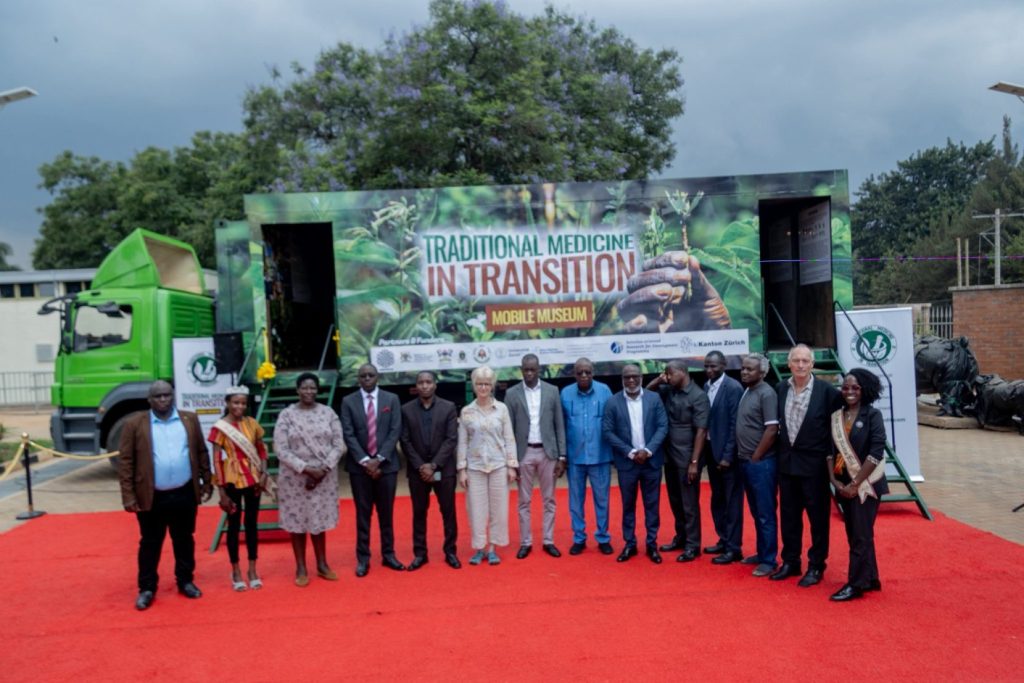
Courtesy photos