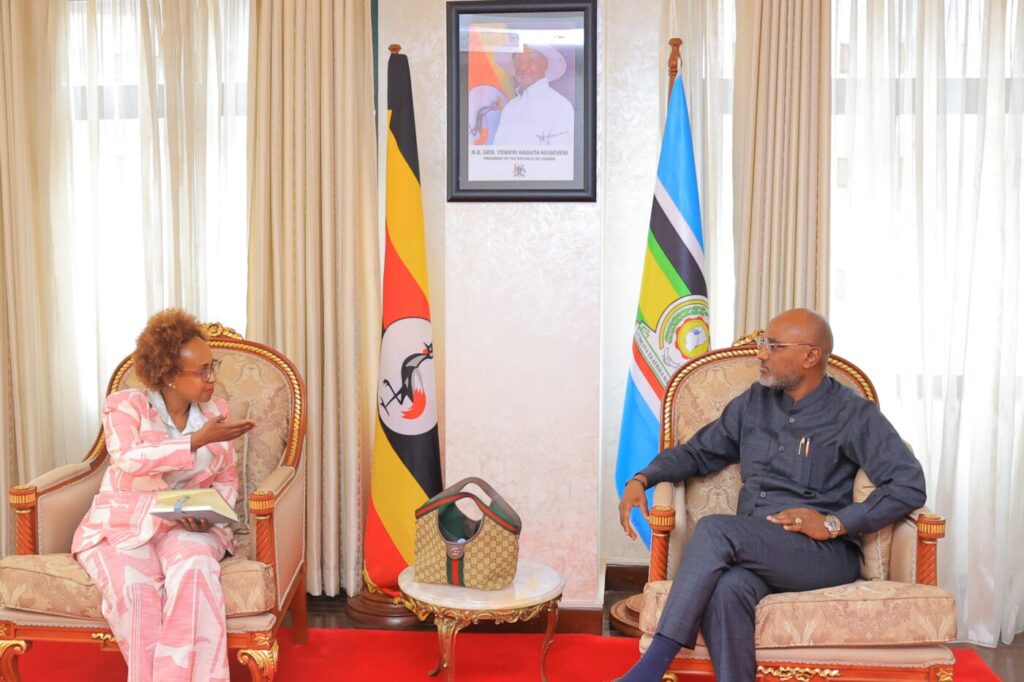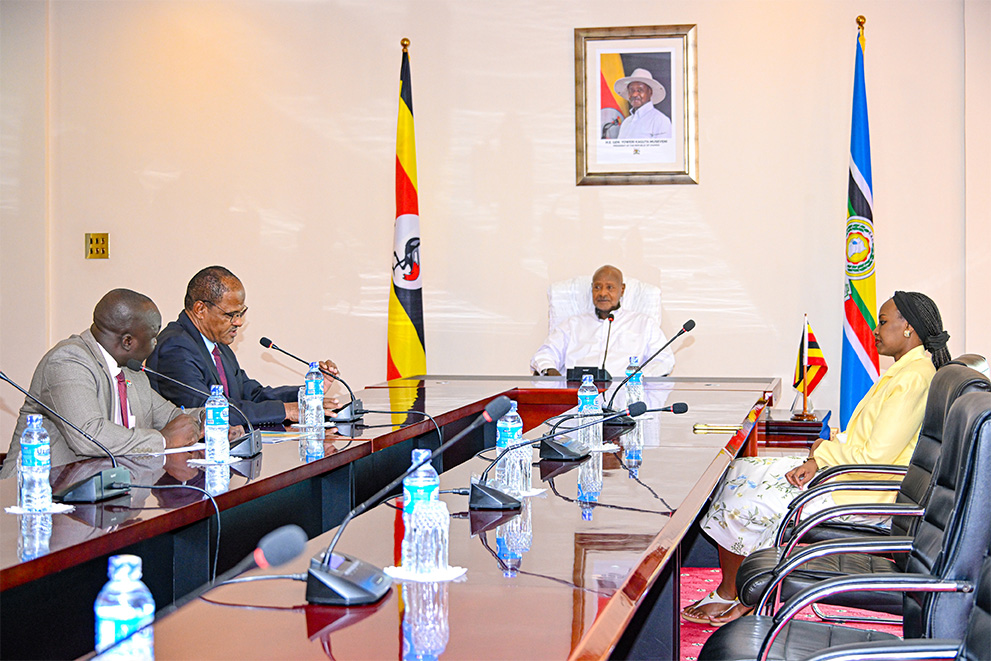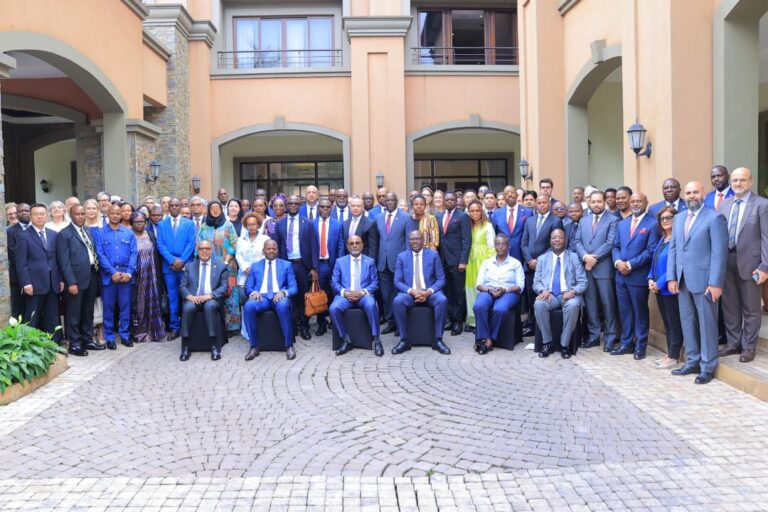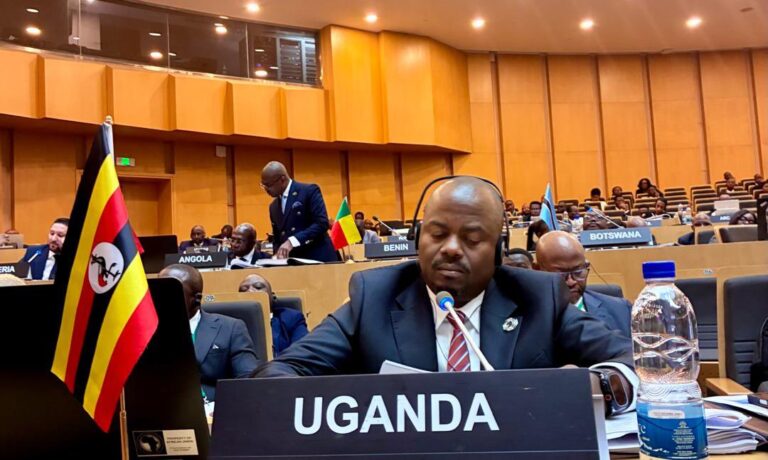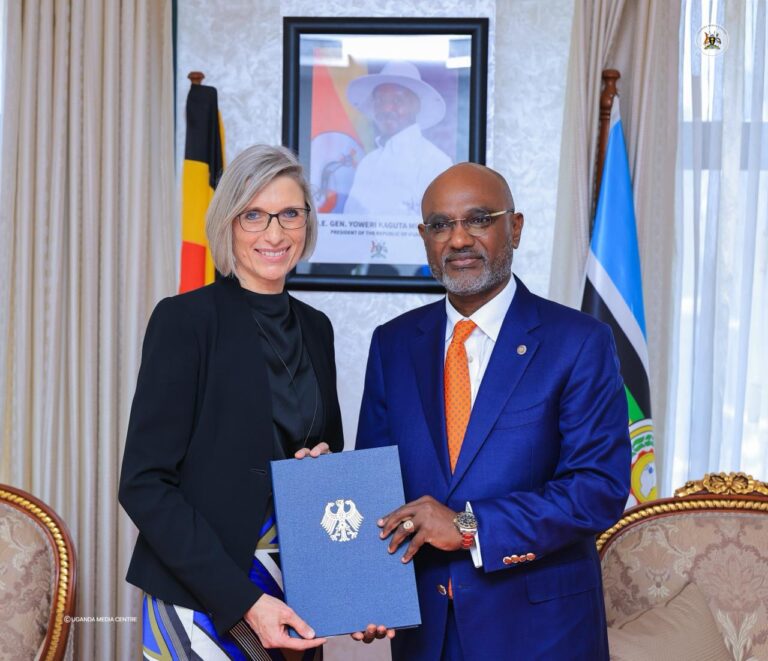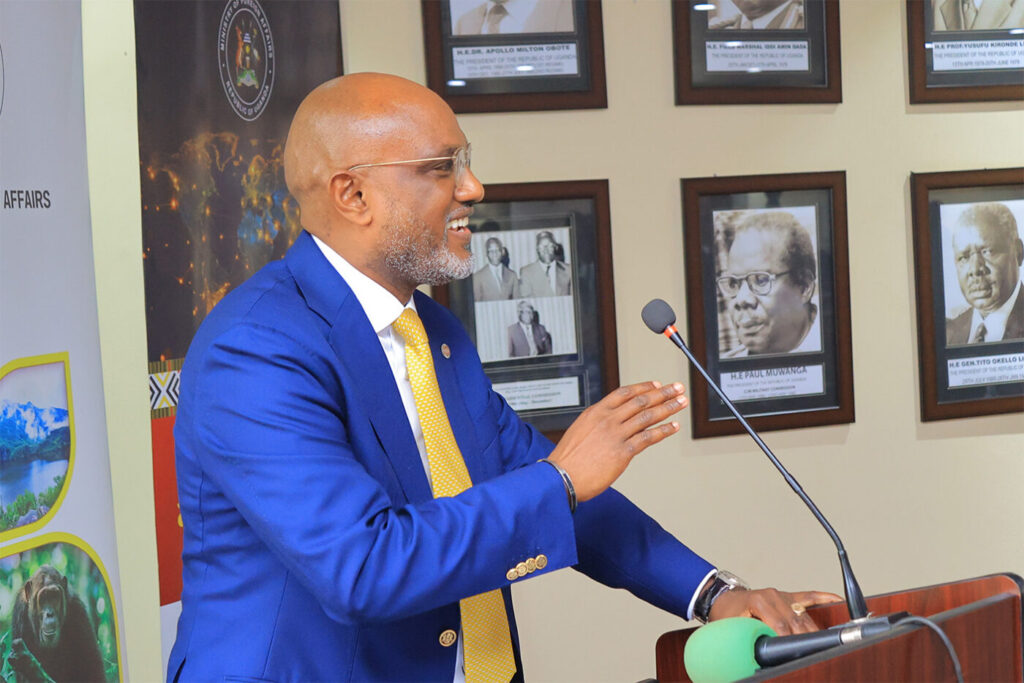
Kampala, Uganda – At a time when international relations are being reshaped by geopolitical competition, regional security challenges, economic interdependence, technological transformation and renewed questions about the future of multilateralism, Uganda’s foreign-policy leadership enters a new chapter under a diplomat whose professional journey has crossed many of these defining terrains. Hon. Adonia Ayebare brings to the leadership of Uganda’s Ministry of Foreign Affairs a career spanning journalism, academic scholarship, conflict prevention and mediation, bilateral diplomacy, African Union engagement and multilateral representation at the United Nations.
His appointment as the Minister in 2026 follows years of service at the centre of Uganda’s engagement with the international system, including his tenure as Uganda’s Permanent Representative to the United Nations in New York, a position to which he was appointed in 2017. Prior to that, he served in senior diplomatic and policy positions involving the Great Lakes region, the African Union and the United Nations.
What distinguishes Hon. Ayebare’s trajectory is not simply the number of diplomatic assignments he has held, but the range of environments through which his professional experience has evolved. He began by observing and explaining public affairs as a journalist, before moving into the demanding terrain of peace mediation, representing Uganda bilaterally, engaging continental institutions and subsequently serving at the highest levels of multilateral diplomacy. His career therefore offers a perspective shaped by several interconnected dimensions of foreign policy: national interest, regional stability, African agency, international cooperation and the place of developing countries within global decision-making.
Hon. Ayebare’s professional career began in journalism when he worked as a staff reporter with East African Business Week (1996-1998), following his graduation from Makerere University in 1993 with a Bachelor of Arts in Mass Communication. He would later serve as an Information Officer with the Integrated Regional Information Network (IRIN) from 1998 to 2000. The experience of the newsroom provided an early education in the realities of public affairs: how events are interpreted, how competing interests shape narratives, and how decisions made in one capital can have consequences across borders, those skills would later become valuable in diplomacy,
Diplomatic practice, much like journalism at its best, requires that one listens before responding, distinguishes fact from perception, understands competing interests and communicates complex matters with clarity. In Hon. Ayebare’s career, the transition from journalism to diplomacy represented less a departure from communication than an expansion of its purpose from reporting on international affairs to participating directly in the processes through which states seek to manage them. Alongside practical experience, Hon. Ayebare developed an extensive academic foundation in international affairs, diplomacy and security. His academic record includes a bachelor’s degree in mass communication from Makerere University; Master’s degrees from Long Island University and The Fletcher School of Law and Diplomacy at Tufts University; a certificate in International Security from Harvard University’s Kennedy School of Government; and doctoral degrees from Indiana University and Rutgers University in the United States.
This combination of academic scholarship and field experience has been particularly relevant to the questions that have defined much of his professional career: conflict prevention, peace and security, regional cooperation, multilateral diplomacy and Africa’s participation in international decision-making. For a foreign-policy institution, such a combination matters. Modern diplomacy increasingly demands both political judgement and analytical depth, the ability to understand the immediate interests of states while also appreciating the historical, economic and security structures within which those interests operate.
A key defining chapter of Hon. Ayebare’s career has been his engagement in the Great Lakes region where he served as Uganda’s Principal Adviser and Special Envoy to the Burundi peace process from 2001 to 2008, during which period he worked within a complex regional environment involving political transition, conflict prevention, mediation and the search for durable peace. Between 2002 and 2005, he served as Uganda’s Ambassador and Head of Mission to Rwanda and Burundi, where his work brought him into close engagement with regional actors and international partners involved in peacebuilding efforts. The experience offered an important lesson in the practice of diplomacy: peace is rarely produced by a single agreement or a single actor. It is built through sustained dialogue, regional ownership, patience, confidence-building and the willingness of parties to remain engaged even when political circumstances are difficult. His broader professional record also includes engagement with mediation efforts concerning Burundi, Somalia and Sudan, providing exposure to different dimensions of conflict prevention and regional security.
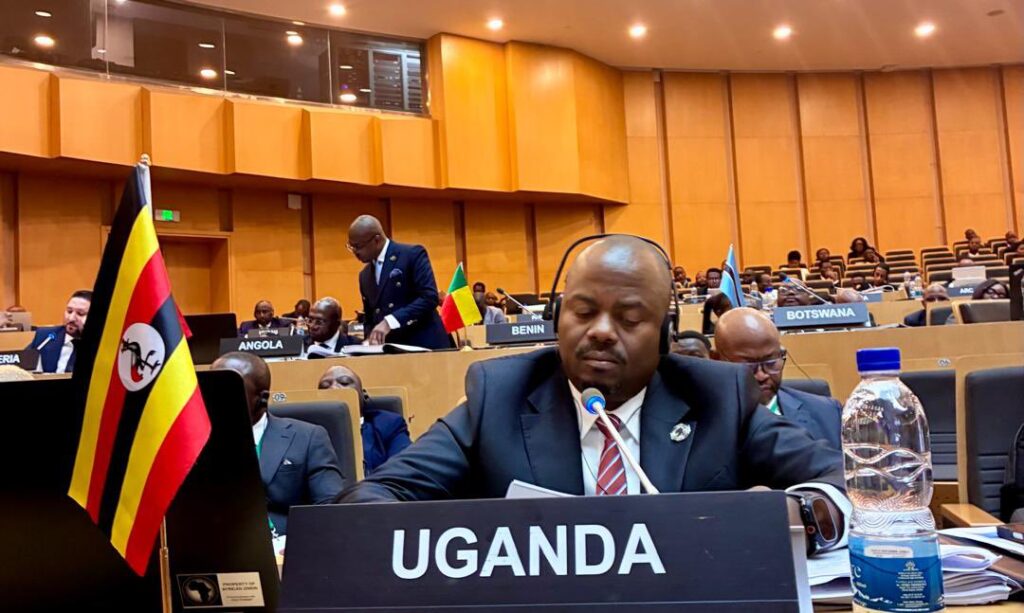
Hon. Ayebare’s career subsequently moved increasingly into multilateral diplomacy as he served as Uganda’s Deputy Permanent Representative and Chargé d’Affaires to the United Nations in New York on two occasions, and as Director of the Africa Programme at the International Peace Institute in New York, where his work connected African peace and security priorities with wider international policy debates. From 2013 to 2017, he served as Senior Adviser on Peace and Security at the African Union’s Permanent Observer Mission to the United Nations in New York, a position that placed him at an important institutional intersection between African Union priorities and the global multilateral system.
In March 2017, he assumed the position of Uganda’s Permanent Representative to the United Nations, presenting his credentials to UN Secretary-General António Guterres on 3 May 2017. The United Nations assignment represented a significant phase in Uganda’s multilateral diplomacy. At the organisation, Uganda’s interests intersect with questions of international peace and security, sustainable development, climate change, humanitarian affairs, global governance and the reform of the international system. It is within this environment that Hon. Ambassador Ayebare’s experience in regional diplomacy, peace and security and African multilateral engagement acquired an increasingly global dimension.
The transition from Uganda’s Permanent Representative to the United Nations to Minister of Foreign Affairs brings together several strands of Hon. Ambassador Ayebare’s professional experience. He has worked at the bilateral level, particularly within the Great Lakes region. He has engaged continental institutions through the African Union. He has participated in peace processes. He has worked within international policy institutions. And he has represented Uganda at one of the world’s principal centres of multilateral diplomacy.
The Ministry of Foreign Affairs therefore becomes the institutional space in which these experiences converge. Uganda’s foreign policy encompasses bilateral and multilateral relations, regional integration, international cooperation, peace and security, consular and diaspora affairs, and the promotion and protection of Uganda’s national interests abroad. The contemporary diplomatic environment, however, requires these responsibilities to increasingly interact with national development priorities. For Uganda, diplomacy is not an end in itself, foreign relations must ultimately contribute to national priorities: peace and security, trade, investment, tourism, technology transfer, education and research partnerships, access to international markets, development cooperation and the strengthening of Uganda’s voice in regional and global institutions.
This is where Economic and Commercial Diplomacy assumes strategic importance with Uganda’s diplomatic missions increasingly expected to operate not only as centres of political representation, but also as platforms for economic opportunity connecting Ugandan enterprises with international markets, identifying investment prospects, supporting export promotion, facilitating partnerships and advancing Uganda’s economic interests. The challenge for foreign-policy leadership is therefore to ensure that Uganda’s diplomatic capital is translated into measurable national value. This requires stronger coordination between foreign policy and domestic economic priorities; deeper engagement between missions and the private sector; more purposeful use of diaspora networks; and a diplomatic service capable of identifying opportunities emerging from changes in global markets.
The international system is undergoing profound transformation, Traditional centres of political and economic influence continue to matter, while new centres of growth, technology, finance and strategic influence are emerging. The global economy is becoming more interconnected even as geopolitical competition becomes more pronounced. Regional organisations are assuming greater importance. African states are demanding a stronger voice in global governance. Questions surrounding the reform of the multilateral system have moved closer to the centre of international diplomacy.
For Uganda, this changing environment creates both opportunities and responsibilities, the country must maintain constructive relationships across different regions and political groupings while safeguarding its national interests. It must deepen African and regional integration, contribute to peace and security, expand economic partnerships and ensure that international engagement supports long-term national transformation. Hon. Ayebare’s professional trajectory has placed him repeatedly at these intersections from the Great Lakes peace processes to the African Union–United Nations relationship and Uganda’s representation at the United Nations. His experience reflects an understanding of diplomacy as more than formal negotiation between governments. It is the continuous work of building understanding between different interests, institutions, regions and societies.
Uganda’s foreign policy also operates within a broader African context, the continent is increasingly asserting agency in shaping its own development and its relationship with external partners. The African Union, regional economic communities and individual African states are navigating questions of peace and security, economic integration, climate change, technology, food security and reform of global governance. Uganda’s diplomatic engagement must therefore simultaneously advance national interests and contribute to continental priorities. This requires an approach that sees African partnerships not simply as matters of protocol, but as strategic instruments for strengthening collective bargaining power, regional stability, market integration and Africa’s participation in global decision-making. Hon. Ayebare’s previous work at the intersection of the African Union and United Nations gives this dimension particular relevance.
One of the defining challenges of contemporary diplomacy is the need to connect security with development. Peace and stability create the conditions for investment, tourism, trade and human development. Conversely, inclusive economic opportunities can strengthen resilience and reduce the vulnerabilities that often contribute to instability. Uganda’s foreign policy therefore operate across these interconnected domains. The diplomatic agenda is no longer confined to political relations. It increasingly encompasses investment promotion, commercial partnerships, energy, infrastructure, food systems, science and technology, education, climate diplomacy, cultural exchange and tourism. For Uganda, the strategic objective is to ensure that these various strands reinforce one another.
From the newsroom to the negotiating table, from regional capitals to the African Union and from the United Nations to the leadership of Uganda’s Ministry of Foreign Affairs, Hon Adonia Ayebare’s professional journey has traversed several dimensions of international public service, each stage has contributed a different perspective. Journalism provided the discipline of inquiry and communication, academic training provided analytical depth. Peace mediation offered practical lessons in negotiation and conflict prevention. Bilateral diplomacy developed the craft of state-to-state engagement. African Union service strengthened continental perspectives while multilateral diplomacy placed Uganda’s national interests within the wider architecture of global governance.
His appointment as Minister of Foreign Affairs in May consequently came at a time when the international environment is changing rapidly and when the expectations placed upon diplomacy are expanding. For Uganda, the central task is clear: to engage the international system with strategic clarity; protect and advance national interests; deepen regional and continental partnerships; contribute constructively to peace and security; and ensure that foreign relations increasingly translate into opportunities for Uganda’s people. The next phase of Uganda’s foreign policy will unfold against a world in which geopolitical alignments are fluid, economic competition is intensifying and the value of strategic partnerships is being reassessed. It will also be a period in which African countries are seeking greater agency in defining the terms of their engagement with the global economy and international institutions.
Uganda’s diplomatic posture must therefore remain principled, pragmatic and forward-looking. It must speak for Uganda while engaging constructively with the world, it must defend national interests while recognising the importance of regional and international cooperation and it must ensure that diplomacy contributes directly to peace, prosperity, investment, trade, knowledge exchange, tourism, technology and sustainable development.
Hon. Adonia Ayebare assumes the leadership of Uganda’s foreign-policy with experience drawn from precisely these interconnected arenas. His journey from journalism to peace mediation, bilateral diplomacy, African Union engagement and the United Nations offers a distinctive professional lens through which to approach the responsibilities of foreign-policy leadership. At a time of profound international transition, Uganda’s diplomatic task is both immediate and enduring: to navigate change without losing strategic direction, to build partnerships without compromising national interests, and to position Uganda as a constructive, credible and increasingly influential participant in Africa and the wider international system.