
When I first wrote “From Fear to Opportunity: Rethinking Uganda’s Dual Citizenship Laws” two years ago in 2024, my argument was that Uganda’s dual citizenship framework, though well-intentioned, was failing the next generation of Ugandans abroad. That argument has only become more urgent. The recent national debate around the Protection of Sovereignty Bill has exposed a deeper question Uganda must now confront, how does the country understand Ugandans who live beyond its borders? Are we outsiders to be managed, or citizens to be engaged? That question is not abstract. It affects remittances, investment, national identity, consular services, family ties, voting rights, and the ability of children born abroad to grow up knowing that Uganda claims them, not conditionally, not reluctantly, but from birth.
The issue is especially clear when it comes to children born outside Uganda to Ugandan parents. Article 10 of the Ugandan Constitution is not vague. It provides that every person born in or outside Uganda, one of whose parents or grandparents was at the time of that person’s birth a citizen of Uganda by birth, is a citizen of Uganda by birth. That should settle the matter. A child born in Boston, London, Toronto, Dubai, Riyadh, Sydney or Johannesburg to a Ugandan citizen by birth is not asking Uganda for a favour. That child is not a foreigner seeking special treatment. That child is already constitutionally Ugandan by birth.
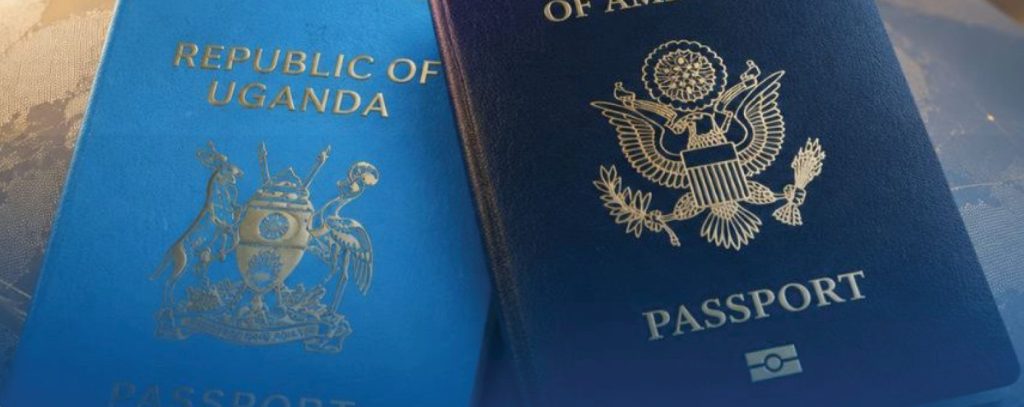
The real problem is that Uganda’s administrative practice has not fully caught up with that constitutional reality. The current practice treats children born abroad as if their Ugandan identity is suspended until age 18. The Directorate of Citizenship and Immigration Control – DCIC states plainly that the law, the 2009 Citizenship and Immigration Control (Amendment) Act, which granted dual citizenship, does not allow children below 18 years born of Ugandans in the diaspora to acquire dual citizenship. That is precisely the gap the Parliament of Uganda must now address. Some argue that there is no problem because a child can obtain a dependent pass or right of abode through the parent, then apply formally at 18. That argument misses the point. A dependent pass is not citizenship. A right of abode is not citizenship. Permission to stay in Uganda is not the same as belonging to Uganda. The heart of the matter is that a child who qualifies under Article 10 of the constitution should not be treated first as an immigration case and later as a citizen.
Citizenship should come first. Documentation should follow. Uganda’s law currently makes adulthood the gate through which many diaspora children must pass before their citizenship is fully recognized in practice. But Article 10 does not say citizenship begins at 18. It says citizenship by birth. There is also an important distinction between voluntarily acquiring another citizenship and being born into one. A child born in the United States, for example, does not “choose” American citizenship. It arises by operation of law. Similarly, a child born abroad to a Ugandan parent does not “choose” Ugandan citizenship under Article 10. It arises by descent, by blood, by constitutional belonging.
The United States understands this principle well. U.S. law recognises that dual nationality can arise automatically by operation of different national laws, including where a child is born to parents of one nationality in another country. U.S. law also does not require citizens to choose between U.S. citizenship and another nationality. Even where a U.S. citizen seeks to renounce citizenship, the process is treated as a serious, personal act. Parents cannot renounce citizenship on behalf of their minor children, and minors are given additional safeguards because citizenship is considered deeply personal and not lightly discarded. Uganda should adopt the same instinct, we should preserve belonging first, regulate documentation second.
To be fair, Uganda has made important progress. Dual citizenship was once prohibited. The 2009 reforms recognized that Ugandans abroad make enormous economic and social contributions and should be able to maintain linkages with their roots, attract investment, and participate more meaningfully in national development. But the framework remains too defensive. The law still carries the old fear that dual citizenship is primarily a security risk rather than a national asset. Children under 18 remain caught in a legal-administrative contradiction. Families are forced to navigate passports, National IDs, visas, certificates, dependent passes and re-acquisition processes as if their connection to Uganda is a privilege to be earned rather than a birthright to be recognised. That is not how a serious diaspora strategy should work.
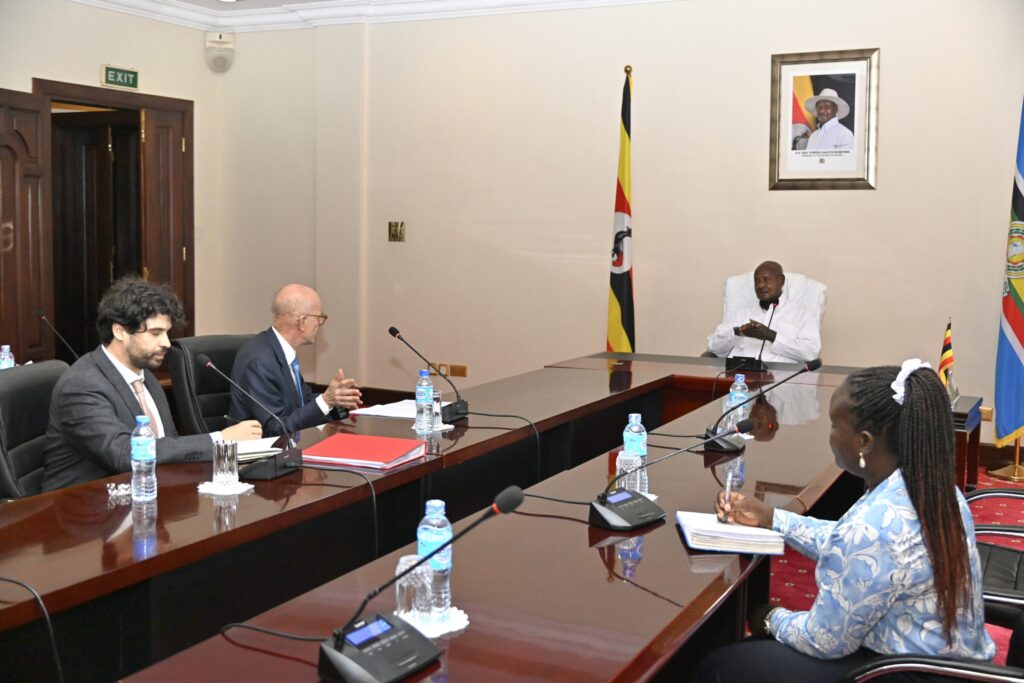
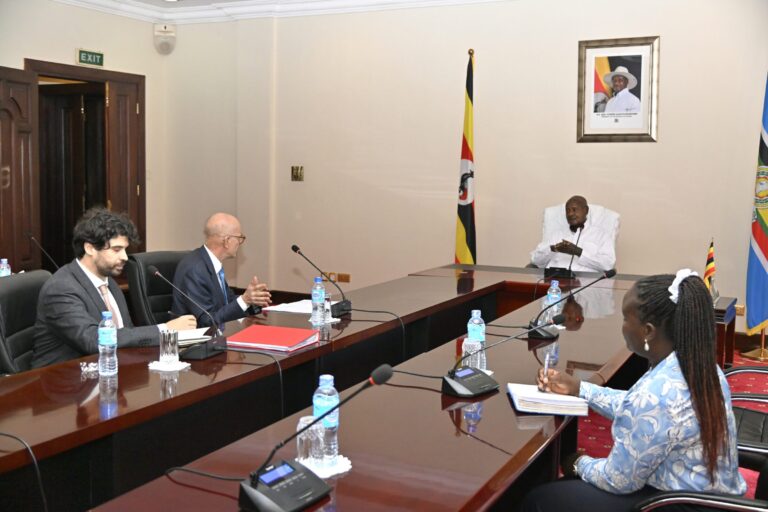
In 2014, while serving as President and CEO of Ugandan North American Association – UNAA, I raised these practical barriers directly with H.E. President Yoweri Kaguta Museveni during his visit to Dallas, Texas. The issue then was cost and access. Dual citizenship fees were too high, visa fees were too high, and Ugandans abroad were being forced into costly travel simply to complete basic documentation. The President listened. The fees were reduced, and government services began moving closer to diaspora communities through embassies and conventions. That was progress. More recently, in June 2025, when we engaged H.E. the President again on the question of children born abroad, he acknowledged the weakness in the current framework and agreed that Parliament needed to review it. His own example, of his grandson being born in the United States was telling. A child born abroad to a Ugandan family does not become less Ugandan because of the hospital where he or she first cried. That is both common sense and constitutional sense.
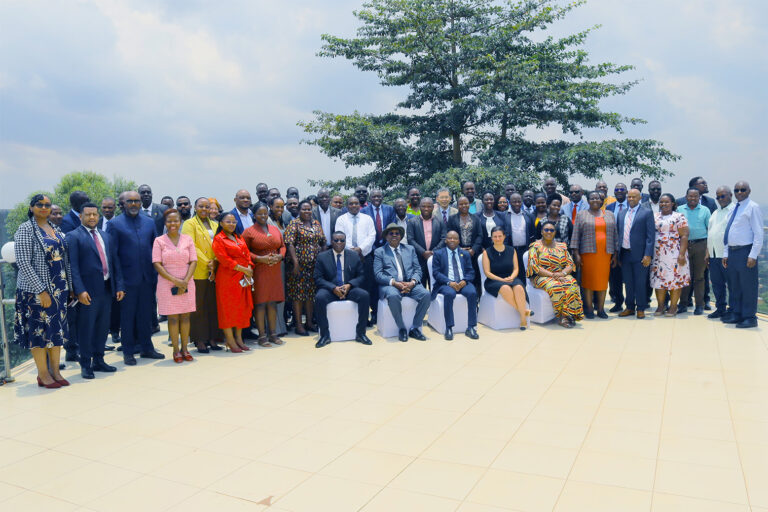
The Sovereignty Bill debate has now created a wider opening. Through the Uganda Global Forum – UGF we submitted diaspora concerns to Parliament and appeared before the joint committees examining the Bill. The concern was straightforward, that Ugandans abroad must never be casually classified as foreigners in their own national conversation. Thankfully, after public concern and stakeholder engagement, Parliament reported that the amended Sovereignty Bill excluded Ugandan citizens residing outside Uganda from the definition of “foreigner.” Parliament also noted that lawful financial flows such as diaspora remittances, foreign direct investment, trade and humanitarian assistance were explicitly protected in the amended law. That amendment matters. It shows that when the diaspora is organized, serious, and constructive, it can influence national policy. But this should not be handled issue by issue, crisis by crisis, bill by bill. Uganda needs a coherent diaspora architecture.
The Bank of Uganda and International Fund for Agricultural Development (IFAD) recently reported that remittance inflows to Uganda reached US$2.5 billion in 2025, approximately 4 percent of GDP. The United States alone contributed about US$702 million, followed by Saudi Arabia, the United Kingdom, the UAE and Canada. And yet, Uganda’s institutional framework for diaspora engagement remains fragmented. The Ministry of Foreign Affairs has a Diaspora Services Department. Parliament has engaged diaspora voices. Different agencies handle passports, National IDs, citizenship, investment, labour externalisation, trade, culture and remittances.
A parent trying to register a child born abroad is not thinking in silos. They are thinking about citizenship, passports, travel, inheritance, school holidays, grandparents, land, culture, language, identity and whether their child will feel Ugandan enough to care.
That is why the reform must be clear. Uganda should amend the law to provide that children born abroad to at least one Ugandan citizen by birth, or qualifying through a Ugandan grandparent under Article 10, are citizens of Uganda by birth. Such children should be allowed to hold another citizenship acquired automatically by birth or descent without losing or suspending their Ugandan citizenship. Parents or guardians should be able to register that citizenship through Ugandan embassies, high commissions or designated online platforms before the child turns 18. Passports, National Identification Numbers, birth registration and other documentation should flow from that recognition. No child who is constitutionally Ugandan by birth should be required to “apply” at 18 as if Uganda is considering whether to accept them. The Constitution opened the door. The law and administration must stop blocking the corridor.
Uganda has a choice. It can continue to treat the diaspora as a source of remittances when convenient, a foreign risk when nervous, and citizens only when politically useful. Or it can build a modern diaspora policy grounded in citizenship, trust, investment, culture and national development. The next phase requires institutional leadership. Uganda’s draft diaspora policy documents have recommended a properly empowered Minister of State for Diaspora Affairs, supported by a dedicated policy and implementation unit capable of coordinating citizenship services, investment facilitation, diaspora data, labour mobility, cultural preservation, remittance policy, voting rights and emergency consular support.
The children of Ugandans abroad are not future Ugandans. They are Ugandans now. If Uganda recognises them early, documents them efficiently, teaches them proudly, and engages their families seriously, they will grow into investors, professionals, cultural ambassadors, voters, innovators and defenders of Uganda’s long-term interests. If we make them wait until 18 to be formally embraced, many will not be waiting for us by then.
Uganda must move from fear to opportunity. And that begins by recognising what Article 10 already says, that a Ugandan child born abroad is still a Ugandan child.
The author is an entrepreneur, engineer, diaspora policy advocate and former President and CEO of the Ugandan North American Association (UNAA). He has engaged Uganda’s executive, parliamentary and diaspora institutions on dual citizenship, National ID access, diaspora policy, trade, investment and structured diaspora engagement.