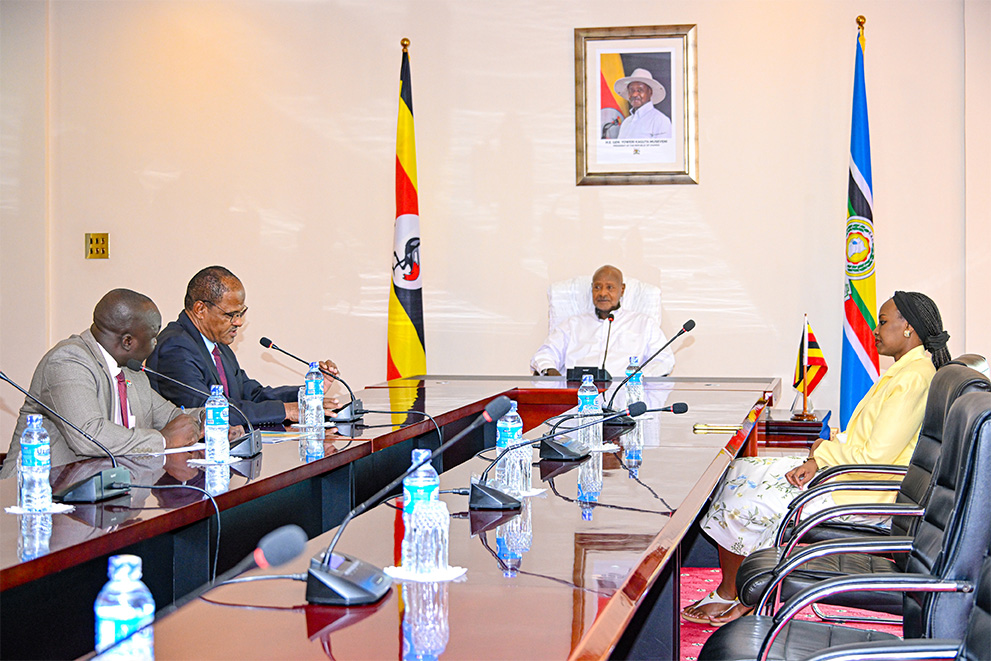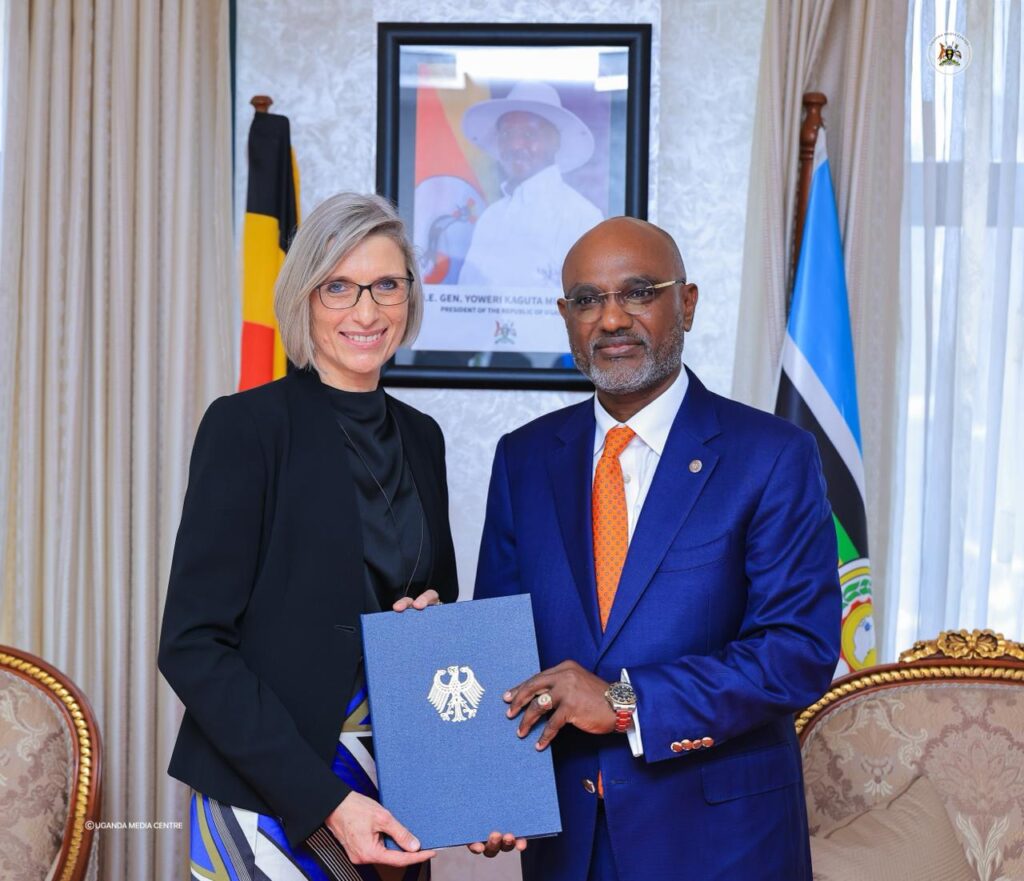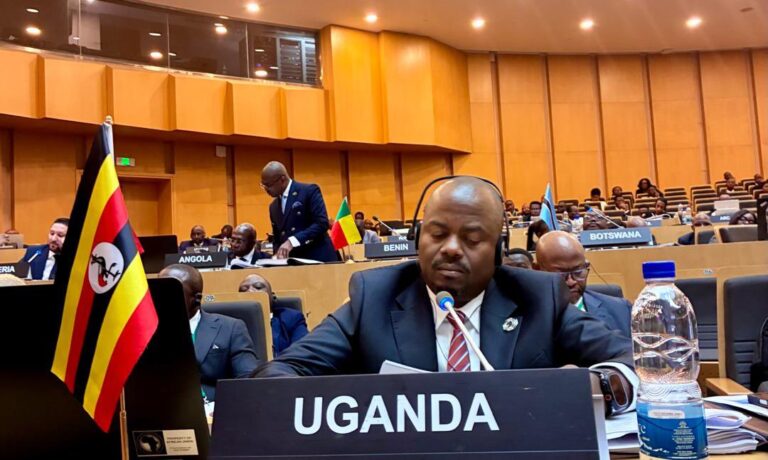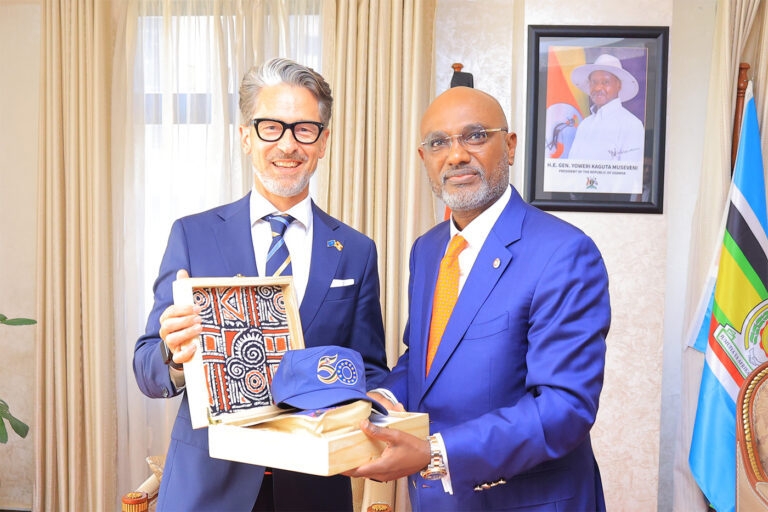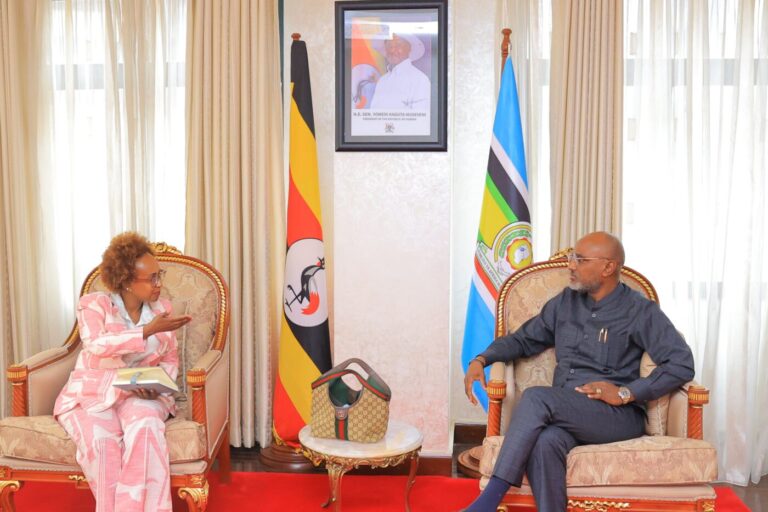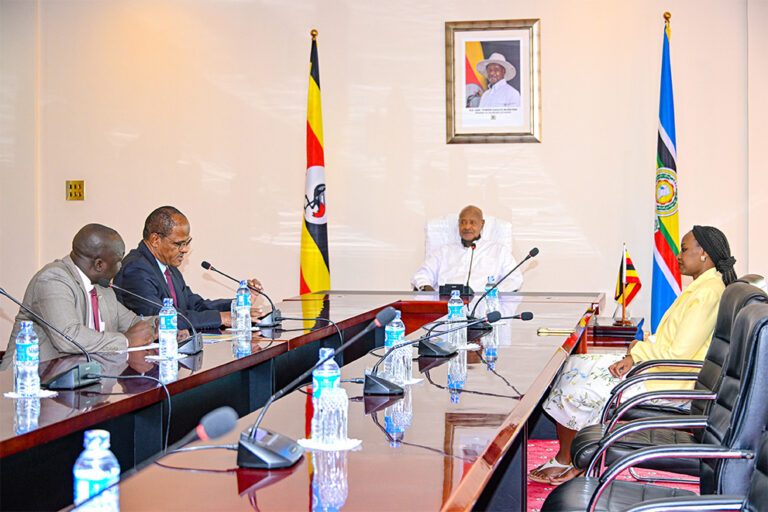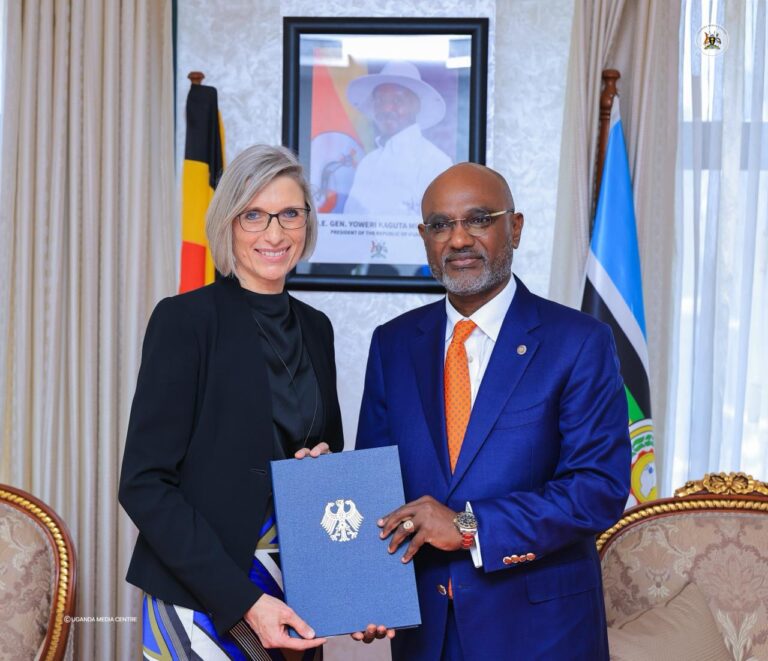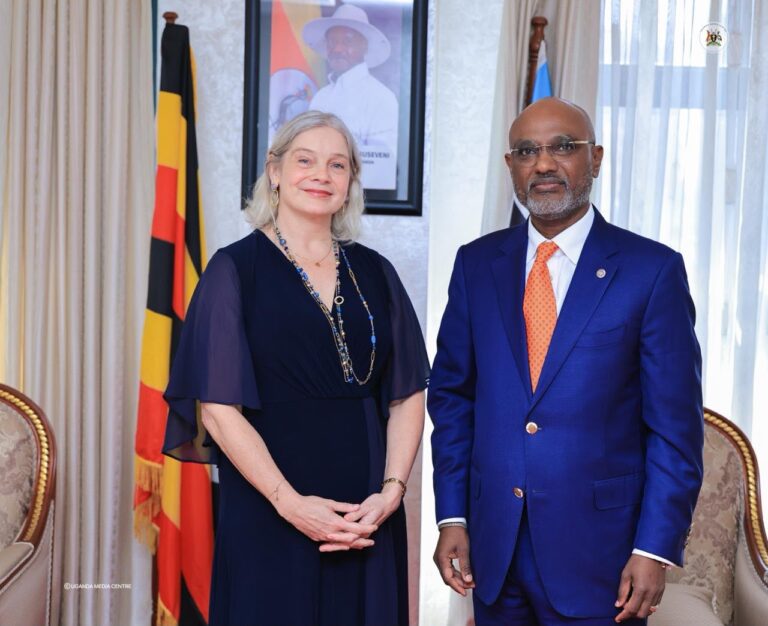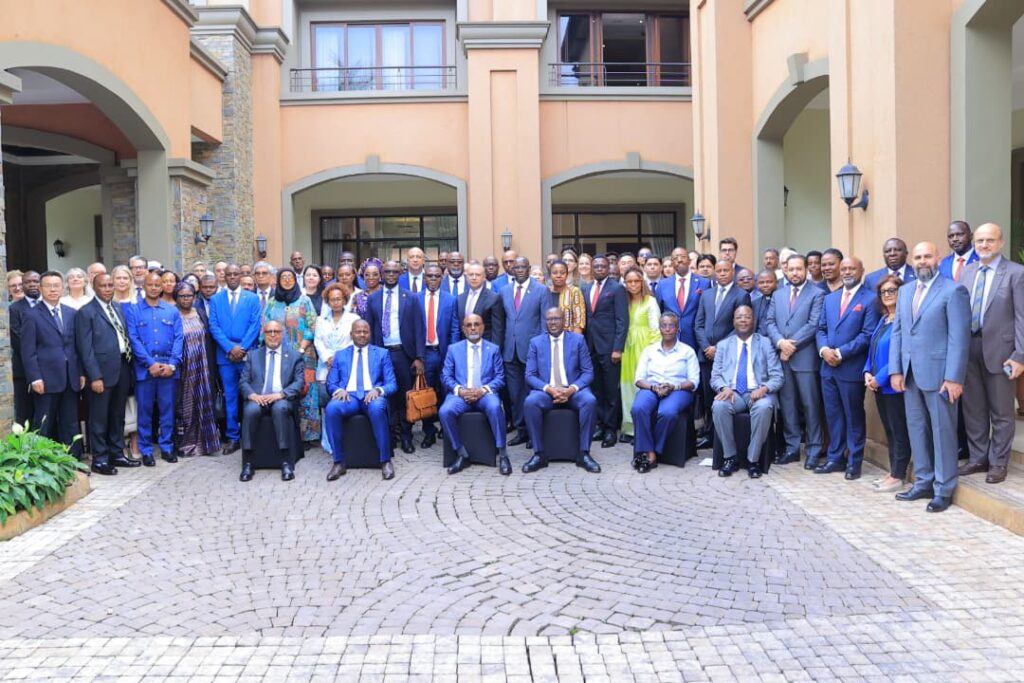
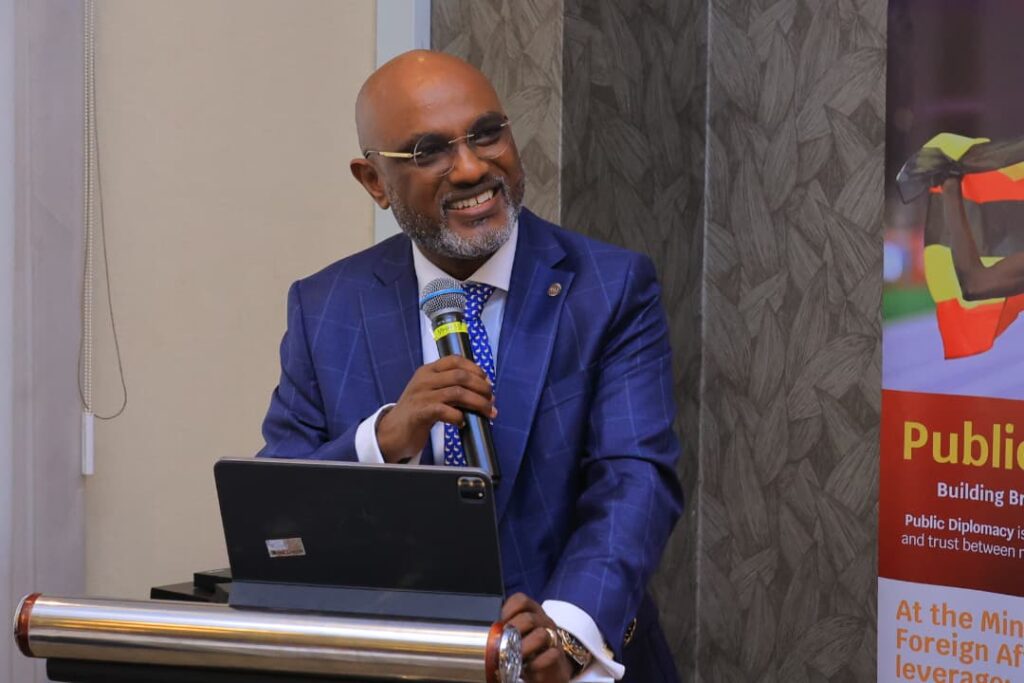
Kampala, Uganda – The Ministry of Foreign Affairs convened a Diplomatic Briefing presided over by Hon. Adonia Ayebare, Minister of Foreign Affairs of the Republic of Uganda. The Minister was joined by Hon. Haruna Kasolo Kyeyune, Minister of State for Foreign Affairs in Charge of Regional Cooperation; Permanent Secretary Mr. Bagiire Vincent Waiswa; Chief of Protocol Amb. Charles Ssentongo; and other senior officials of the Ministry.
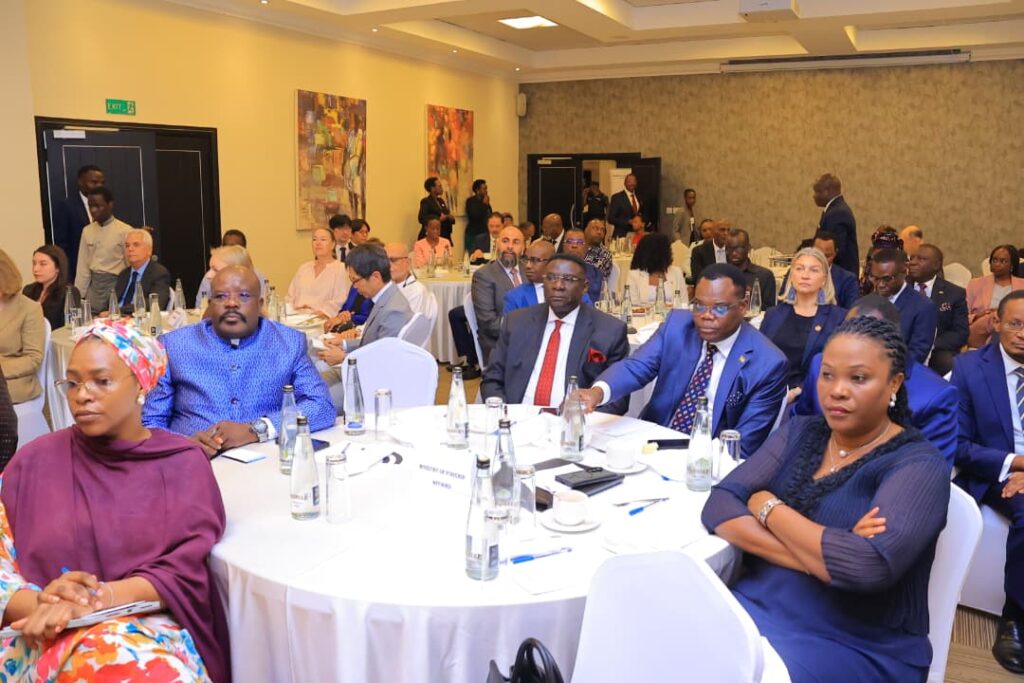
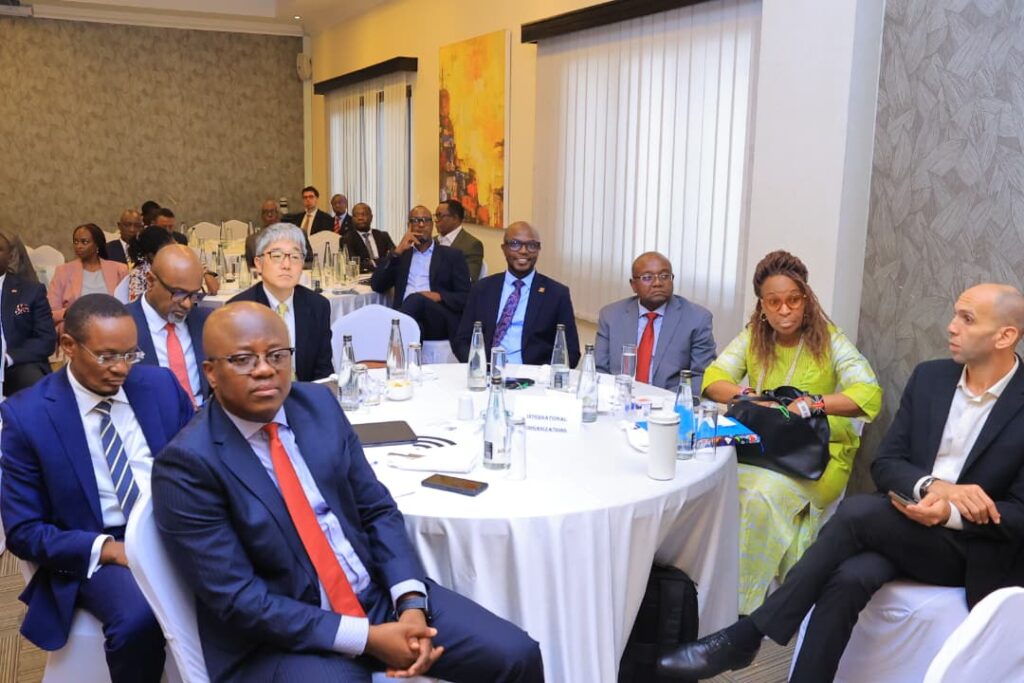
The maiden briefing by Hon. Ayebare brought together Heads of International Organisations, Honorary Consuls, Ambassadors and High Commissioners accredited to Uganda. In his address, Hon. Ayebare stated that Uganda’s foreign policy is anchored on the promotion and protection of national interests in an increasingly interconnected and competitive global system. He emphasised that Uganda’s diplomacy must be strategic, results-driven, and directly aligned to the country’s domestic transformation agenda.
The Minister informed the Diplomatic Corps that Government’s overarching economic objective is the Tenfold Growth Strategy, which seeks to grow Uganda’s Gross Domestic Product tenfold to USD 500 billion by 2040. He added that realising this ambition will require scaled investment, export diversification, value addition, and accelerated adoption of technology across all sectors. On governance and public service delivery, Hon. Ayebare stated that Government has undertaken the rationalisation of Ministries, Departments and Agencies. The reform is intended to eliminate duplication, reduce wastage of public resources, and enhance efficiency, accountability and service delivery. He observed that these measures are critical to improving Uganda’s investment climate and to supporting the Tenfold Growth Strategy.
The Minister highlighted major milestones in the energy sector noting that access to electricity has increased significantly following the completion of new generation facilities, which expanded and reliable power supply is essential to industrialisation, value addition, and the improvement of livelihoods nationwide. On oil and gas, Hon. Ayebare announced that the East African Crude Oil Pipeline – EACOP is on course for completion this year, with the commencement of crude oil exports thereafter. He described the project as a transformative undertaking that will generate substantial government revenue, create jobs, catalyse related industries, and strengthen Uganda’s position as a regional energy hub.
On socio-economic transformation, the Minister reaffirmed that the Parish Development Model – PDM remains the principal vehicle for delivering prosperity at the grassroots. The PDM is designed to increase household incomes, enhance productivity, ensure food security, and promote export-oriented production. He called upon development partners to align their programs with PDM priorities and with the national objective of a USD 500 billion economy.
Outlining the mandate of the Ministry, Hon. Ayebare stated that its work will be guided by the agro-based industrialisation, tourism development, mineral-based industrialisation and STI (Science, Technology and Innovation), under the ATMS framework. For the ATMS, the Ministry will prioritise the attraction of strategic investment into the four areas, facilitation of technology transfer, mobilisation of development financing, and securing of expanded market access for Ugandan goods and services in both regional and global markets.
The Minister reaffirmed Uganda’s commitment to regional peace, security and stability, and underscored Uganda’s constructive role within the East African Community (EAC), IGAD, and the African Union. He reiterated Uganda’s position, as a member of the African Union Committee of Ten – C-10, in advocating for the comprehensive reform of the United Nations Security Council to ensure equitable representation for Africa.
On global issues, Hon. Ayebare emphasised Uganda’s commitment to multilateralism and addressing climate change through Nationally Determined Actions. He stressed the importance of climate justice, including adequate climate finance and technology transfer for developing countries. He further noted Government’s focus on smart technology and digital transformation as critical enablers of productivity and competitiveness.
Regarding Law and Diplomacy, the Minister affirmed that while Government welcomes constructive engagement with partners, it retains the sovereign right to determine the country’s destiny. He assured the Corps that the Sovereignty Protection Act does not undermine diplomatic privileges and immunities, and that Uganda remains fully committed to the Vienna Convention on Diplomatic Relations of 1961.
Hon. Ayebare pledged to institutionalise regular engagements with the Diplomatic Corps, the Consular Corps, and other stakeholders. He reiterated his commitment to an open-door policy and to dialogue that is frank, respectful, and mutually beneficial as Uganda advances toward its goal of a USD 500 billion economy by 2040.
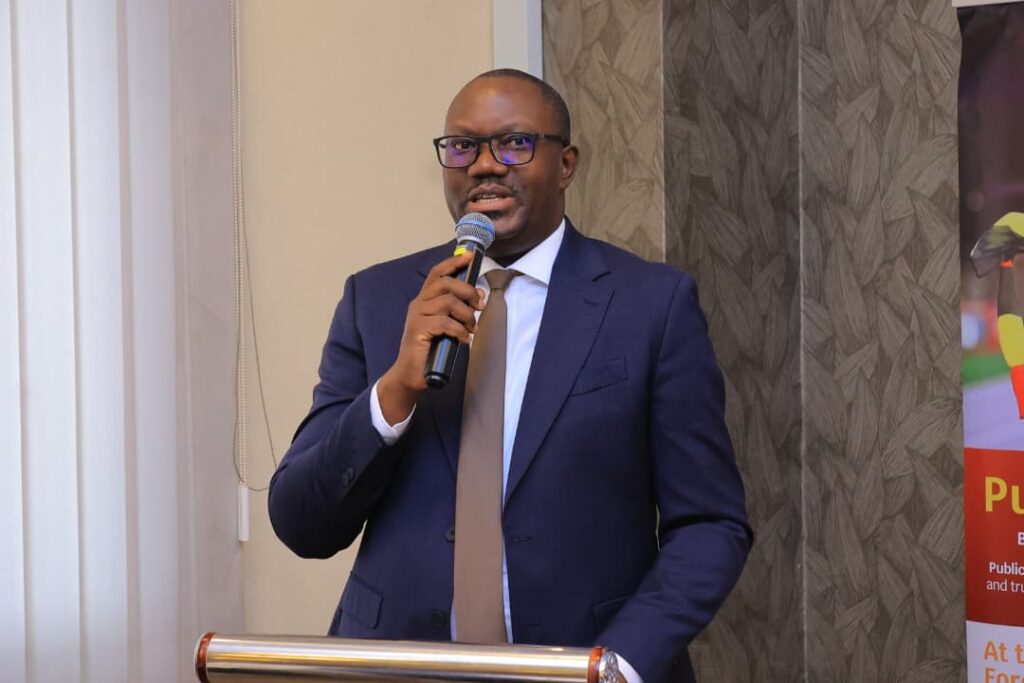
Delivering remarks on behalf of the Dean of the Diplomatic Corps, H.E. Joseph Rutabana, High Commissioner of the Republic of Rwanda to Uganda, thanked the Minister for convening the briefing. He described it as a timely and constructive platform that will strengthen mutual understanding, coordination, and partnership between Uganda and the diplomatic community.
The briefing underscores the Ministry’s renewed commitment to strategic engagement and to the effective projection of Uganda’s interests and image on the global stage.
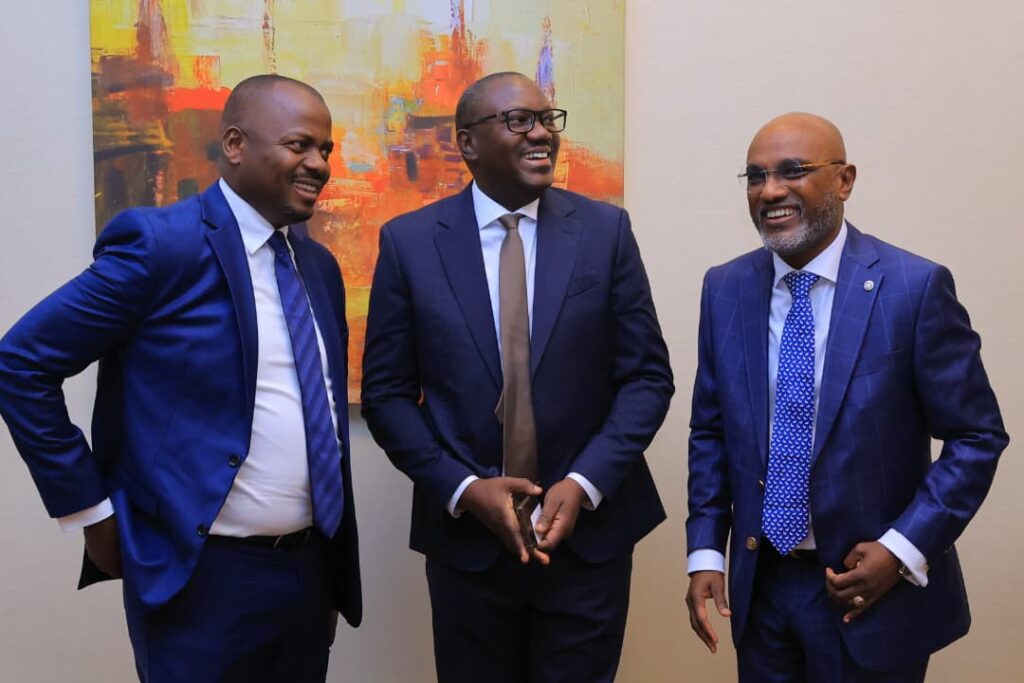
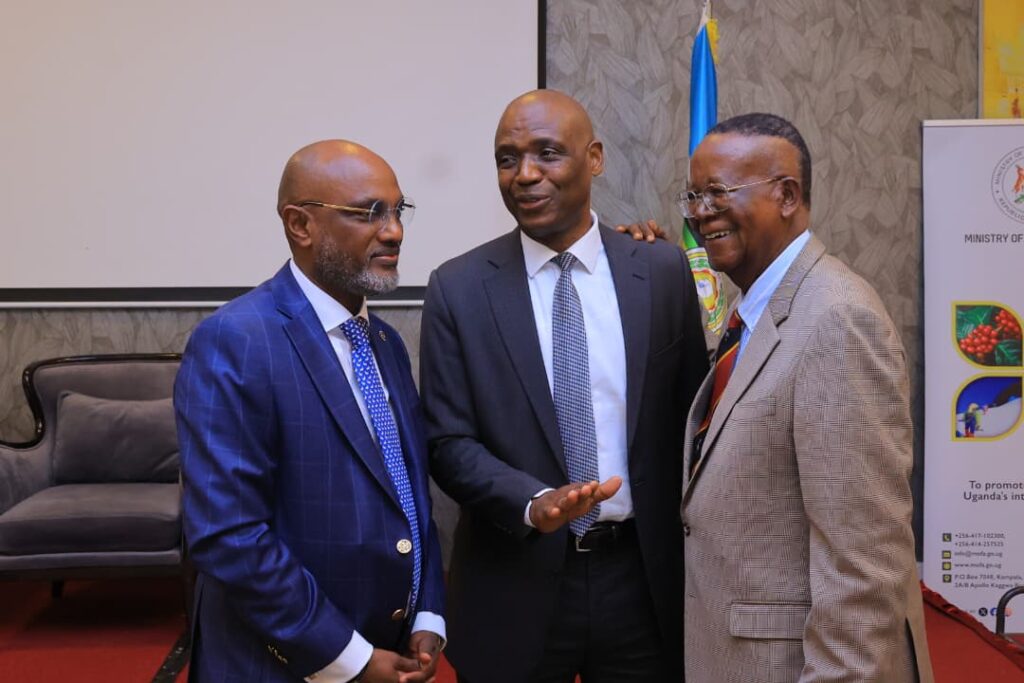
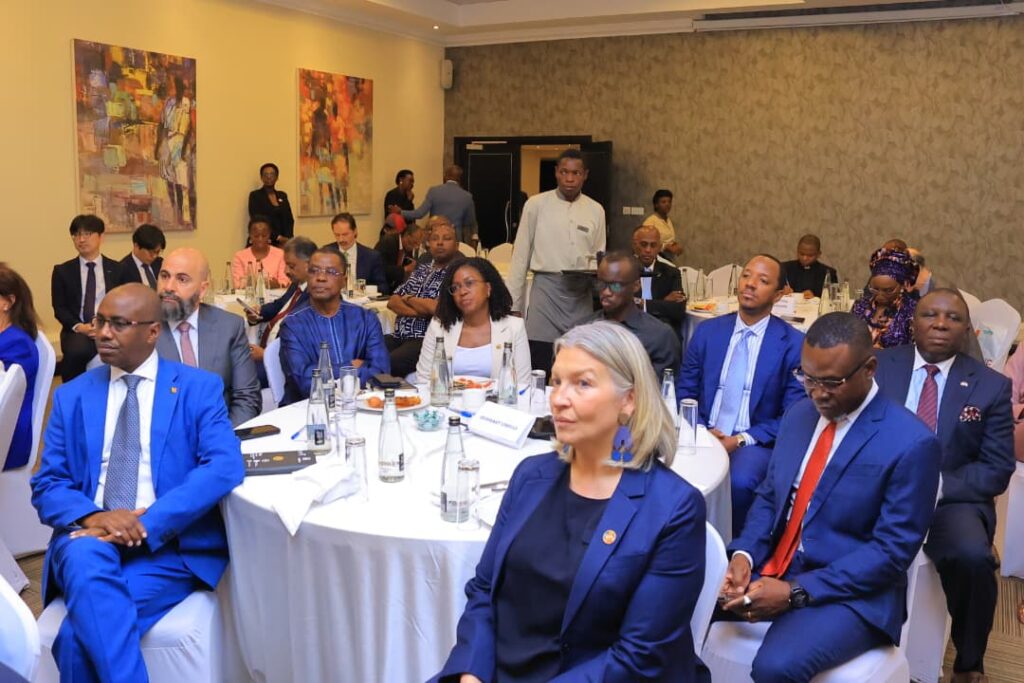
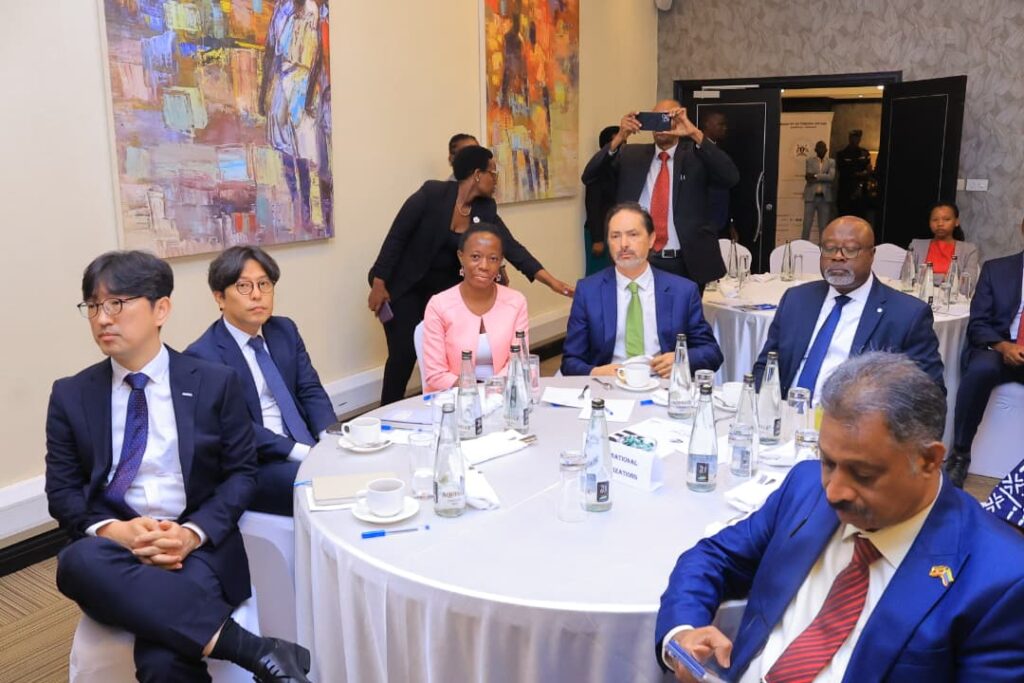
PhotoCredit: Fahad Mugga