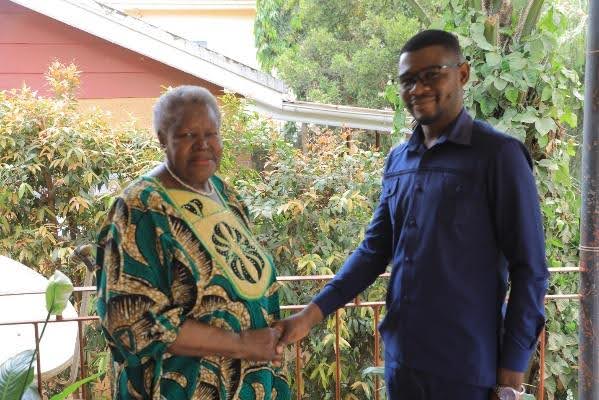
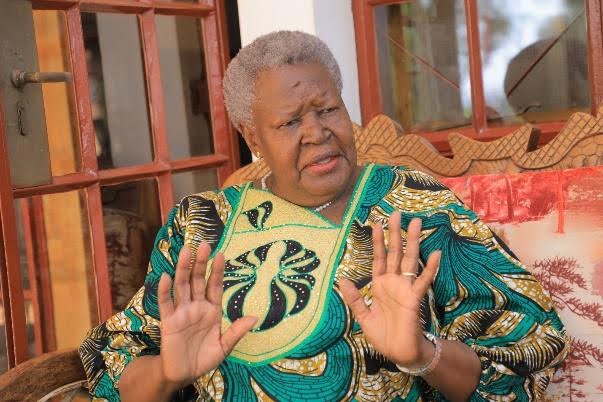
At 27, when many people are still learning to navigate the adult world, Bernadette Bernadette was handed a diplomatic portfolio that would place her at the centre of Uganda’s foreign policy at a pivotal moment in global history. In this rare and wide-ranging conversation, she reflects on leadership, courage, missteps, lessons, and the responsibility that comes with representing a nation. What follows is a deeply human portrait of a woman whose journey has shaped and continues to shape Uganda’s diplomatic memory.
Q1. Ambassador, thank you for hosting me together my team, my name is Amiri Wabusimba, and I propose we begin from a place many readers often find most intriguing identity. For those encountering your story for the first time, who is Ambassador Bernadette Olowo-Freers, and how did your journey into public service begin?
Amb. Bernadette:
My name today is Bernadette Olowo-Freers, though my full story carries several names from different chapters of my life. My maiden names, which my grandmother guarded dearly, include Bernadette and Mufaliso. I was born in Tororo. I am now approaching 80 retired, yes, but as people say, retired is not tired. I served both nationally and internationally, and my journey into diplomacy began quite simply: with opportunity, curiosity, and a willingness to learn. I joined the Ministry of Foreign Affairs in 1973 as a young Foreign Service Officer, after completing diplomatic training at IPA (now UMI). We were 14 trainees; I was the only woman because the only other young woman in our cohort eventually did not join. That circumstance alone taught me early that sometimes the world does not slow down for you to catch up. You just learn to walk faster.
Q2. Many know you as one of Uganda’s youngest envoys. Could you take us to that moment in the mid-1970s, when you were unexpectedly summoned back from your posting in West Germany?
Amb. Bernadette:
Yes, that moment still feels surreal. In late 1974, I received a message that I was being recalled to Kampala for “consultations.” A junior officer usually does not get summoned for onsultations, so I knew something unusual was unfolding. I later learned that the summons came from President Idi Amin himself.
I was anxious, my father was anxious, those were years when the recall of an officer especially from Germany could have multiple meanings. Officers had defected from various stations; returning home was, in some cases, a personal risk. After two days of waiting at the Ministry, the Permanent Secretary, Mr. John Ntimba, escorted me to State House. The President entered jovially and began asking about my education and my age. When I told him I was 27, he nodded and said, “I know you are young. I know you have no experience yet. But I am appointing you as my Ambassador to West Germany.” I was stunned. The officers with me were stunned. After I accepted, it was mentioned to him that the posting to Germany also carried accreditation to the Vatican, Austria, and the Netherlands. He simply said, “Then I appoint you to all those places.”
And that is how it began.
Q3. You’ve written that even though you had met President Amin before, you still felt fear when you were summoned. What shaped that feeling?
Amb. Bernadette:
I had met President Amin during our diplomatic training when he lectured us about the Middle East war and his admiration for the Arab world. But the fear I felt in 1974 was contextual. By the time I got to Germany, Ambassador Barigye and other officers had defected. Recalling a junior officer from that particular station could easily be misinterpreted. Many people who were recalled simply never returned to Uganda they stayed abroad. For me to come back was an audacious act in itself. The easier choice would have been to stay away. But I believed that if I was called, I needed to answer. Whatever the consequences.
Q4. You were 27, heading to Germany, Austria, the Netherlands and the Vatican the first woman in 900 years to be accredited to the Holy See. What did that moment feel like?
Amb. Bernadette:
Overwhelming. Exciting. Terrifying. All at once. Before I even departed, the President instructed that a vehicle be placed at my disposal so that I could tour the country. That one-month tour through West Nile, Karamoja, Elgon the islands became the foundation of my diplomatic voice. It gave me a textured understanding of the country I was about to represent. I lost almost 10 kilos on that tour partly the exhaustion, partly the anxiety of stepping into deep waters.
On the diplomatic front, my appointment had been abrupt and unannounced to host governments, which is unusual. A receiving state is normally notified in advance. Still, Germany accepted, Austria accepted, the Netherlands accepted, and more historically the Vatican accepted. When I arrived at post, senior ambassadors welcomed me generously. Even the Tanzanian Ambassador, Amb. Daniel N. Mloka, welcomed me warmly despite Uganda and Tanzania being on opposite sides politically at the time. He said, “The quarrel back home is not our mandate here. Here, we serve our countries professionally.” That goodwill shaped my early years.
Q5. You later served in multiple portfolios, including multilateral work with the UN. But you eventually decided to write a book. What inspired that decision?
Amb. Bernadette:
I felt a sense of obligation; my life has been anything but ordinary. I served in Germany, the Vatican, various departments in Foreign Affairs, the Ministry of Planning, economics, and later in UNAIDS for 13 years. When I retired from public service and joined the UN, I realised that many of the lessons I had collected were disappearing into private memory. Retired ambassadors often sit with vast reservoirs of institutional knowledge but young diplomats rarely get access to it. For me, writing the book was not a celebration of myself; it was an act of stewardship. I wanted to leave a resource that younger diplomats, public servants, or even scholars of leadership could learn from.
My background was modest, I paid my own P1 fees, My father did not think girls needed school until he saw that I passed. That early struggle shaped my determination. I wrote this book so that a young person somewhere can realise that origins do not limit destiny.
Q6. You mentioned earlier that the name “Mufaliso” is part of your story. Where did it come from?
Amb. Bernadette:
(Laughs.) That name came from my grandmother. I was born on a mattress because my mother, in labour, refused to get off her bed. Most babies in our village were born on prepared banana-leaf mats on the ground. So the old woman said, “This one is a real child of luxury Mufaliso.” She called me that until she died. It was not my parents; it was village humour at its finest.
Q7. The world today is turbulent, and diplomacy is evolving rapidly. What principles guided you throughout your career both as a diplomat and as a global citizen?
Amb. Bernadette:
Three principles carried me through.
- First, hard work. When I was thrown into deep waters, I swam because I was willing to work harder than my fear.
- Second, courage. Courage is not loud; sometimes it is simply showing up when everyone expects you to run.
- Third, service beyond politics.
When Germany told me plainly that politically nothing could be done with Uganda, I asked them to help the ordinary people. That is how I secured 50 annual scholarships for Ugandans in medicine, agriculture, engineering, and more opportunities that strengthened our future workforce.
Diplomacy is not just about statecraft; it is about stewardship. What you leave behind matters more than the title you carry.
Q8. What diplomatic lessons highlighted in your book do you believe remain most relevant in today’s shifting geopolitical landscape?
Amb. Bernadette:
The world today no longer moves on bilateral goodwill; it moves on collective bargaining.
Africa must negotiate as a bloc if it hopes to succeed whether on trade, minerals, technology access, or climate justice. A country saying “Come buy my oil,” while another says, “Come buy my gold,” fractures our leverage. If we negotiate as East Africans, or as Africans, we stand differently at the global table. We can insist on shared standards so that what applies in Uganda applies in Kenya, in Ghana, in Senegal. That is how influence is built.
Q9. In today’s era of multipolarity and digital diplomacy, where do you see Africa’s greatest opportunity for cooperation?
Amb. Bernadette:
Our biggest opportunity lies in strengthening the African Union’s practical coordination. Not speeches systems. We need shared frameworks for innovation, for digital security, for currency systems, for climate financing. These are not glamorous topics, but they shape sovereignty. The AU is trying, but not fast enough. If Africa presents itself as a mosaic of isolated states, it will be treated as one, if it presents itself as a unified economic and diplomatic force, the world will respond accordingly.
Q10. Many young diplomats will read your book. What guidance do you believe they will draw from your experience?
Amb. Bernadette:
Young people do not lack ambition they often lack mentors who walk beside them. I have worked with young officers who were brilliant, dedicated, and eager. But systems sometimes misjudge them, discourage them, or label them prematurely. That is why elder diplomats must be willing to guide, correct, and uplift. Training matters. Exposure matters. Consistency matters.
And above all, humility matters. No career grows in a straight line.
Q11. Some readers may interpret your memoir as a roadmap to statecraft. Which chapter, in your view, best embodies the principles of responsible leadership?
Amb. Bernadette:
Different chapters reflect different seasons of leadership. Being Ambassador in Germany required diplomatic sensitivity. Leading teams in Zambia or eSwatini required team-building. Working in the UN required multilateral discipline. But if I had to choose, I would say the chapter where I describe forging unity within diverse teams. Leadership is not about authority; it is about enabling people to excel collectively. That is responsible leadership.
Q12. Diplomatic life carries difficult moments. Which challenge in your book shaped you most profoundly, and how did it influence the way you practiced diplomacy then?
Amb. Bernadette:
Challenges came at every stage, but one pivotal moment was in 1986, when the new government reassigned some of us from Foreign Affairs. I was posted to a new ministry where, quite literally, I found no one in the office. For a moment, I wondered whether my career had ended whether I was no longer seen as useful. But instead of being discouraged, I allowed the moment to redirect me. That is how I eventually moved to the Ministry of Planning, later to Health, and eventually to the UN. The lesson stayed with me: Every redeployment is a chance to reinvent yourself.
Nothing in public service is guaranteed not even tomorrow.
Q13. Looking back at your rich and varied career, what moment stands out as the most defining turning point?
Amb. Bernadette:
Without hesitation the moment I was appointed Ambassador at 27. That single moment changed the architecture of my entire life. But it only remained meaningful because I chose to rise to the responsibility rather than run from it. Some people would have understood if I had refused or fled. But I accepted. Everything that came after flowed from that decision.
The story of Ambassador Bernadette Olowo-Freers is not just a record of diplomatic milestones; it is an archive of courage, cultural memory, and public service. Her experiences span a century of political transitions, global shifts, and institutional evolution. But perhaps her most enduring legacy lies in what she tells young people: that destiny is not inherited it is built.